
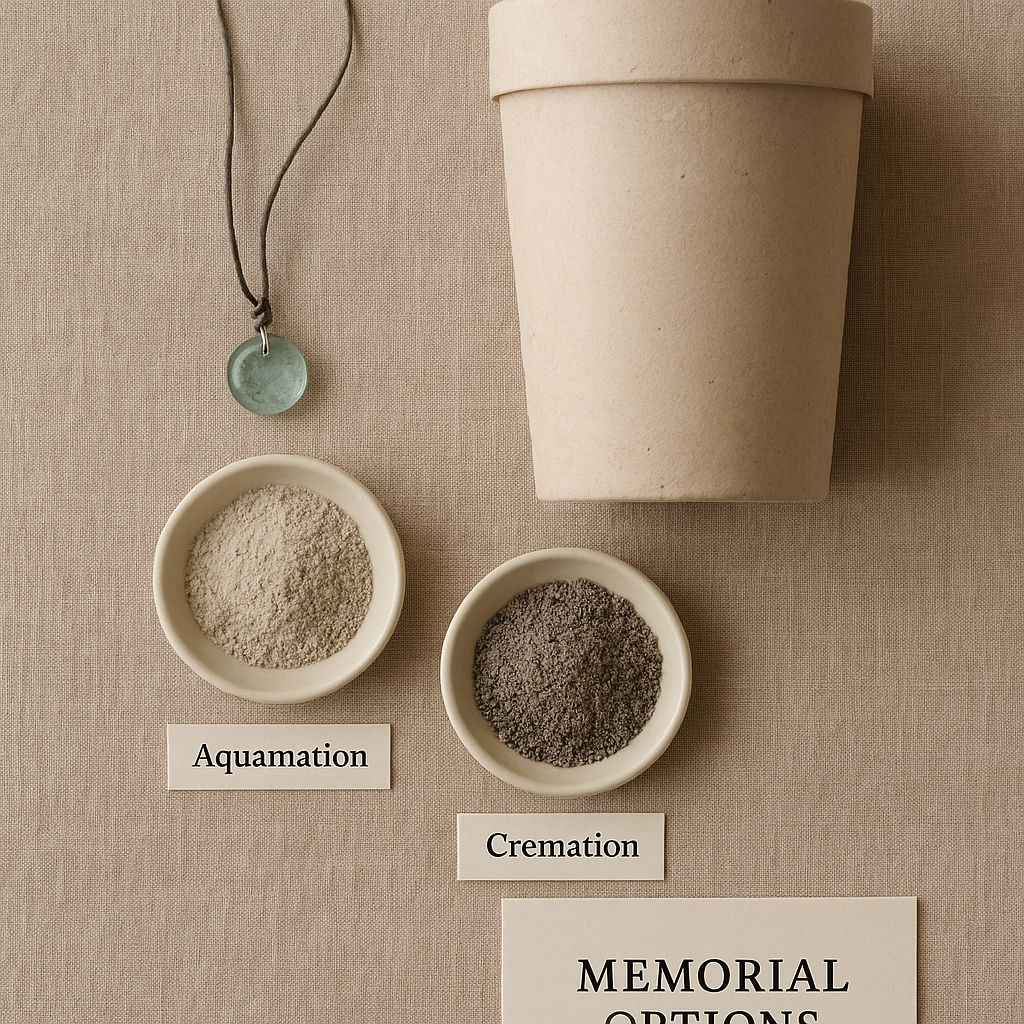
Clear differences between aquamation and cremation ashes and how to use them.
How and why aquamation and cremation ashes differ in look and volume
Families often notice that ashes returned after aquamation look and feel different from ashes after flame cremation—and they wonder what that means for memorials. Aquamation (alkaline hydrolysis) gently returns remains to mineral components using water, warmth, and alkalinity instead of flame. The result is typically a fine, light‑colored ash and, in many cases, a slightly greater volume than flame cremation. A veterinary explainer summarizes the process and environmental profile: AAHA: Aquamation—The Green Alternative to Fire Cremation. Manufacturer briefs also outline why the resulting cremains are often lighter in color and texture: Introduction to Alkaline Hydrolysis for Pets (PDF). By contrast, flame cremation uses sustained high heat powered by fossil fuels, producing airborne emissions and often returning a darker ash with slightly less volume. Both methods, when conducted privately (one pet per cycle), return your companion’s ashes with dignity and documentation. If private processing and chain of custody are priorities, ask providers to walk you through their identification protocols from intake through return; professional definitions and expectations are summarized by the Pet Loss Professionals Alliance: PLPA Cremation Definitions and Standards (PDF). Knowing how and why ashes differ can help you choose memorials—glass, jewelry, living tributes—that align with your values and the material itself.
Handling, safety, and custody: labeling, storage, and shipping tips
No matter the method, custody and labeling protect meaning. Keep cremains in a sealed, labeled container with your pet’s name, unique ID (if provided), date, and method (“Private Aquamation” or “Private Cremation”). Store in a cool, dry place out of direct sun. If you’re sending a small portion to an artist, reserve a part at home and use tamper‑evident containers with tracking. Ask the artist to document intake and return; many publish chain‑of‑custody steps. For terminology and consumer protections that mirror best practice in pet aftercare, consult the Pet Loss Professionals Alliance standards: PLPA Cremation Definitions and Standards (PDF). If you plan sea scattering, follow EPA rules (three nautical miles offshore and simple reporting): U.S. EPA: Burial at Sea. For garden memorials, use a cremains‑safe soil amendment and select drought‑tolerant natives; LA families can explore species at the Theodore Payne Foundation: Theodore Payne Foundation—Native Plants and CalScape: CalScape: California Native Plant Database.
Memorial uses: jewelry, art, gardens, and eco‑friendly choices
Ashes can become part of everyday remembrance. • Home displays: a simple urn on a shelf with a framed photo and a written letter. Choose FSC‑certified wood, recycled glass, or biodegradable paper urns with disclosed materials; verify claims using the U.S. FTC’s Green Guides: FTC: Green Guides. • Art and jewelry: hand‑blown glass, ceramic glaze, or recycled‑metal pendants using a small portion of cremains. Ask for shipping kits with tamper‑evident seals and a signed intake form. • Living memorials: native planters or garden spaces nourished with a cremains‑specific amendment; for renters, create a portable memorial in a large container. • Sea ceremonies: partner with licensed charters who understand EPA requirements and practice Leave No Trace etiquette. Choose memorials that match your pet’s story and your daily life—the pieces you’ll care for with ease tend to be the most meaningful and sustainable over time.