
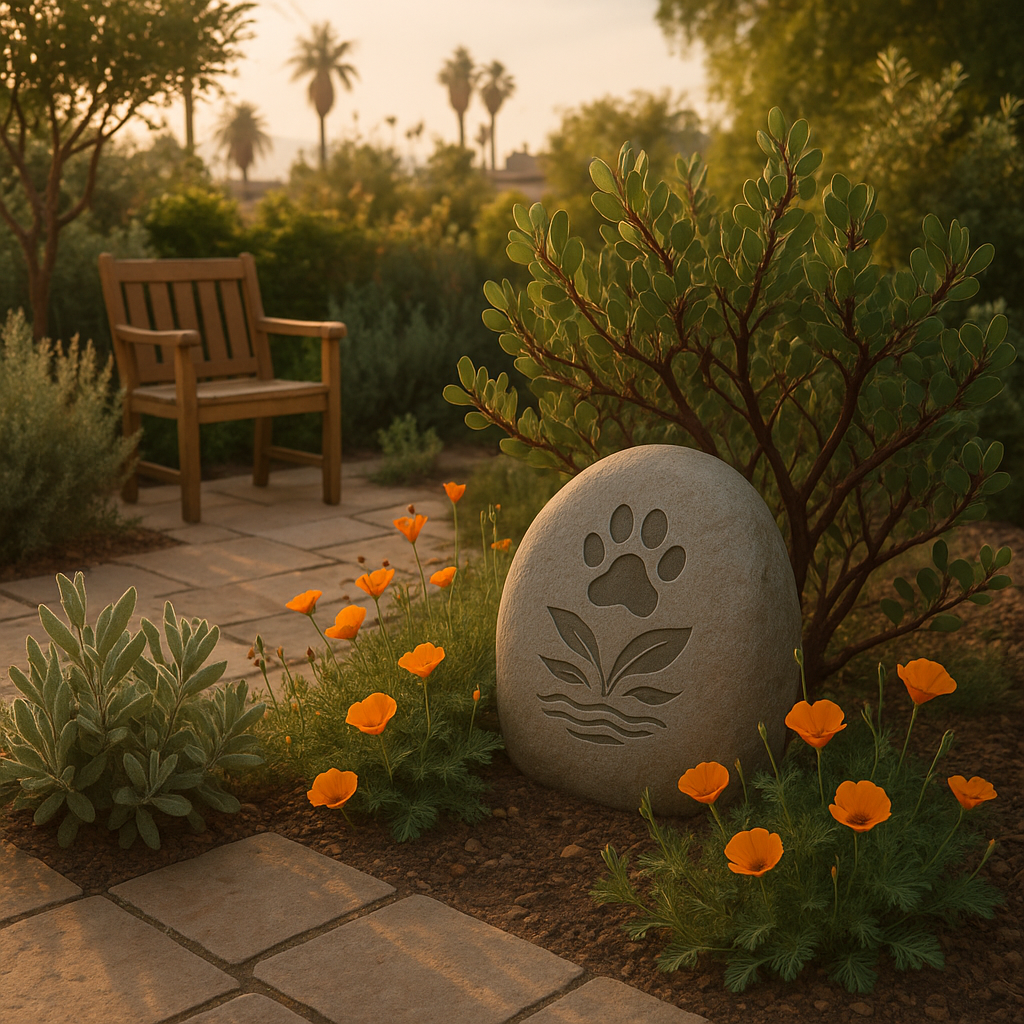
Practical, eco‑friendly memorial ideas tailored to Southern California homes.
Native plant memorials and sustainable, small‑space design
Many families want memorials that feel authentic and gentle on the planet—especially in Southern California, where drought and heat shape what thrives. Start with your space and the local ecology. A small patio can host a beautiful living tribute built around native plants that support pollinators and require less water. In larger yards, a quiet corner can become a reflective garden with a simple stone and seasonal blooms. If you plan to incorporate a small portion of cremains into a planting, use a soil amendment designed for cremated remains to protect roots, and place planters where runoff won’t concentrate salts in the soil. Choose region‑appropriate natives to reduce watering and invite wildlife. Consider California sagebrush and Cleveland sage for scent and resilience; foothill or bearberry manzanita for sculptural structure; and seasonal color from California poppies and native buckwheats. Reputable local resources can help you select species that fit your microclimate and sunlight: explore plant databases and classes from the Theodore Payne Foundation at Theodore Payne Foundation—Native Plants, and browse region‑specific plant lists on CalScape: CalScape: California Native Plant Database. Design with simplicity. A single, smooth stone with a subtle pawprint, a reclaimed‑wood bench, and a few well‑placed natives can feel more reverent than a crowded space. Use mulch to retain moisture and suppress weeds; group plants by water needs; and favor terracotta or recycled‑content containers. If you rent or expect to move, create a portable memorial in a large container, so your living tribute can travel with you. In apartments, a sunny balcony with a small planter, a framed photo, and a candle can become a daily place of remembrance without heavy water use or new materials. For broader context on low‑impact aftercare choices, see an accessible overview of aquamation’s environmental benefits here: AAHA: Aquamation—The Green Alternative to Fire Cremation.
Sustainable keepsakes, art, and digital remembrance options
Not every remembrance needs to involve physical ashes. If you chose communal aftercare or prefer to keep ashes secure, consider sustainable keepsakes and art that honor your pet’s story with minimal footprint. Biodegradable urns—made from recycled paper, salt, or sand—can be kept at home until a future scattering or garden placement. Small amounts of cremains can be incorporated into hand‑blown glass or ceramic glaze by artists who publish their firing and handling protocols; verify chain‑of‑custody documentation and shipping safeguards. For families who prioritize reducing consumption, a simple frame with a favorite photo and a written letter becomes a lasting heirloom without new materials; choose FSC‑certified wood or reclaimed frames from local shops. Digital memorials preserve memories while avoiding shipping and manufacturing impacts. Curate a private online gallery, a shared folder with favorite videos, or a dedicated memorial page where friends can leave stories. If you want a tactile element without new products, build a “memory shelf” from items you already own—a collar draped over a favorite book, a candle, a small vase of native flowers. When evaluating options, remember that eco‑friendly choices start with reuse and minimalism; invest only in pieces that feel truly meaningful and durable. If you’re drawn to living memorials beyond your own yard, verify rules and permits in advance. Public spaces and trail systems vary in their policies, and scattering may be prohibited. For ocean ceremonies, federal rules require ceremonies at least three nautical miles offshore and simple post‑event reporting; review details here: U.S. EPA: Burial at Sea. If you’d like to understand aquamation’s environmental profile as you plan, the Humane Society of Central Oregon explains why they adopted this lower‑emission method: Humane Society of Central Oregon: Aquamation Overview, and AAHA provides a veterinary perspective: AAHA: Aquamation—The Green Alternative to Fire Cremation.
Ceremonies and records: planning low‑impact, meaningful rituals
Small, intentional rituals make remembrance feel grounded and sustainable. Plan a brief ceremony at home—read letters, share a favorite song, and place your memorial stone or planter where it catches morning light. Keep a simple record of the day: date, who was present, what you shared, and a photo of the memorial in its place. This becomes a family touchstone, especially for children. Consider seasonal stewardship as part of the ritual: pruning natives in fall, adding mulch before summer heat, and refreshing water for birds. If you maintain a digital memorial, add a few new photos or stories on birthdays or adoption anniversaries rather than buying new objects. For grief support that complements these practices, the California Veterinary Medical Association curates resources and support groups across the state: CVMA: Pet Loss Support. National grief communities such as the Association for Pet Loss and Bereavement hold free online chats and support sessions at Association for Pet Loss and Bereavement. Combining gentle, low‑impact rituals with community and time helps families heal without compromising sustainability values. In the LA climate, native plantings and light‑touch ceremonies can thrive for years, turning remembrance into ongoing care for a place you love. When you’re ready, your provider can help you pair eco‑friendly aftercare—such as private aquamation—with memorial choices that fit your home and heart. The goal isn’t perfection; it’s meaning, continuity, and care for both your companion’s memory and the environment you share.