
Introduction
IVDD (intervertebral disc disease) is a spinal condition in which a cushioning disc between your dog's vertebrae bulges or ruptures and presses on the spinal cord, causing back or neck pain, wobbling, weakness or even paralysis. It is most common in Dachshunds and other short-legged breeds. Caught early, many dogs recover with strict rest or surgery, but sudden trouble walking is an emergency that needs a vet the same day.
Key Takeaways
- IVDD happens when a damaged disc presses on the spinal cord, causing spinal pain, weakness or paralysis.
- Early warning signs include back or neck pain, stiffness, a hunched posture, reluctance to jump and a wobbly walk.
- Dachshunds make up 45% to 70% of cases, and long-backed, short-legged breeds face the highest risk.
- Sudden inability to walk, loss of bladder control or loss of pain feeling in the legs is an emergency.
- When dogs can still feel pain in their legs, about 90% regain the use of their legs after surgery and 60% to 80% with strict medical management.
- If pain or disability can no longer be managed, a gentle goodbye can be the kindest choice, and you can plan it ahead with your veterinarian.
IVDD is a painful spinal condition that affects the intervertebral discs that cushion your dog's back bones. When disc material bulges or ruptures, it can press on the spinal cord and lead to pain, weakness or even paralysis. If you are seeing signs of IVDD, quick action matters. Knowing what to watch for, what treatment may involve, and when quality-of-life decisions become part of the conversation can help you protect your dog and make informed choices.
What Is IVDD in Dogs and Which Breeds Are Most at Risk?
Intervertebral disc disease happens when the cushioning discs between the bones of the spinal column degenerate, bulge or rupture and push into the space around the spinal cord. Each disc has a tough outer ring around a gel-like center. That pressure on the cord can cause pain, weakness, neurological deficits and, in severe cases, complete paralysis. It helps to think of these discs as shock absorbers that also allow normal bending and turning.
Most ruptures happen in the middle and lower back. According to Cornell's Riney Canine Health Center, about 65% of cases involve the back (thoracolumbar) region and about 18% the neck alone.
Certain breeds face a higher risk because of body structure and genetic predisposition. The American College of Veterinary Surgeons (ACVS) notes that Dachshunds account for 45% to 70% of cases. Other commonly affected breeds include:
| Breed group | Typical age when signs appear |
|---|---|
| Short-legged (chondrodystrophic) breeds: Dachshund, Pekingese, Beagle, Lhasa Apso, Toy and Miniature Poodle, Cocker Spaniel | Usually 3 to 6 years |
| Larger breeds: Labrador Retriever, German Shepherd, Doberman Pinscher | Usually 5 to 12 years |
Dogs with long backs and short legs are especially vulnerable, which leads naturally to the question of what causes it.
What Causes IVDD in Dogs and Can It Be Prevented?
IVDD starts with disc degeneration inside the spinal column. In chondrodystrophic breeds, the discs change early and the center hardens, sometimes showing calcification on X-rays by 2 years of age. That makes a sudden disc rupture more likely, and one wrong jump, awkward landing or rough play can trigger it. In other dogs, the process is slower, and the disc gradually bulges over time as the supporting tissues weaken.
You cannot prevent every case, and genes play a large part. Cornell notes that genetic testing can predict disc risk and that breeders can use the results to plan safer matings. At home, you can still support spinal health:
- Keep your dog at a healthy weight. Extra pounds strain the spine and joints (see our guide to how excess weight affects mobility).
- Limit stairs and jumping on or off beds, sofas and decks. Ramps help.
- Choose calm walks over high-impact games such as leaping for a thrown toy.
- Use a body harness instead of a neck collar on walks.
- Support the whole body, front and back, when you lift your dog.
- Call your veterinarian at the first sign of back discomfort.
These steps lower strain, but they do not erase risk. That is why spotting the signs of IVDD early matters so much.
What Are the Main IVDD Symptoms in Dogs and When Is It an Emergency?
The main IVDD symptoms in dogs include back or neck pain, stiffness, a hunched posture, reluctance to jump, wobbling, weakness, dragging or crossing the back feet, and trouble standing or walking. Some dogs seem anxious, shiver or snap when touched. Dogs with neck pain may avoid turning the head, or go to the food or water bowl but not eat or drink unless the bowl is raised.
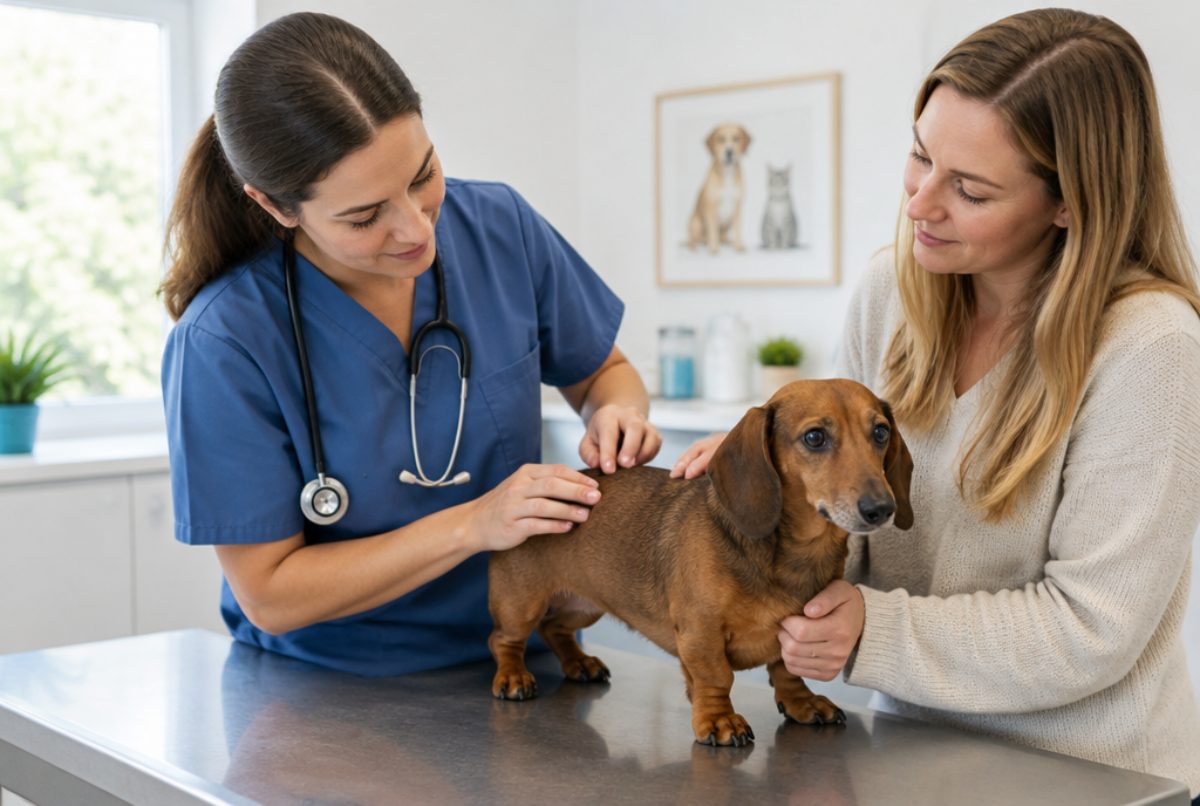
It becomes an emergency when you see sudden difficulty walking, complete paralysis, loss of bladder or bowel control, or worsening weakness. Severe pain also needs immediate medical attention. To understand how veterinarians judge symptom severity, it helps to look at the grading system used for IVDD.
How Do Vets Grade IVDD in Dogs?
Veterinarians often describe IVDD by how much function a dog has lost, because severity helps guide treatment and prognosis. A widely used tool for back (thoracolumbar) disc disease is the modified Frankel scale, which runs from 5 (pain only) down to 0 (paralysis with no deep pain feeling), as described in a 2020 study in Frontiers in Veterinary Science.
| Frankel score | What you may see |
|---|---|
| 5 (mildest) | Spinal pain only; your dog still walks normally |
| 4 | Wobbly, weak or uncoordinated, but still able to walk |
| 3 | Can move the back legs but cannot walk |
| 2 | Back legs paralyzed; pain feeling still present |
| 1 | Back legs paralyzed; superficial pain feeling lost |
| 0 (most severe) | Back legs paralyzed with no deep pain feeling |
Some clinics number the same stages differently, so ask your vet to explain the grade in plain words. In practical terms, dogs that are still walking often start with conservative treatment, while dogs that cannot walk usually need imaging and may need surgery. Next, it is important to separate a concerning case from a true emergency.
Which IVDD Signs Mean You Need an Emergency Vet Now?
Some IVDD signs should never wait. The ACVS describes a disc rupture as a surgical emergency, and Cornell warns that delaying recommended surgery raises the risk that the spinal cord degenerates beyond recovery. That is why sudden decline deserves immediate medical attention, even if your dog seemed only mildly uncomfortable earlier in the day.
Go to an emergency vet now if your dog has:
- Sudden inability to stand or walk
- Back legs that are dragging, crossing or paralyzed
- Loss of bladder or bowel control
- Severe pain, crying out, or refusing to move
- Rapidly worsening weakness
Time matters most when a dog can no longer walk or loses deep pain feeling. Dogs at that stage may need urgent MRI or CT imaging and surgery to relieve pressure on the spinal cord. Once the emergency picture is clear, the next question is whether strict rest or surgery is the better path.
Rest or Surgery: Which IVDD Treatment Is Right for Your Dog?
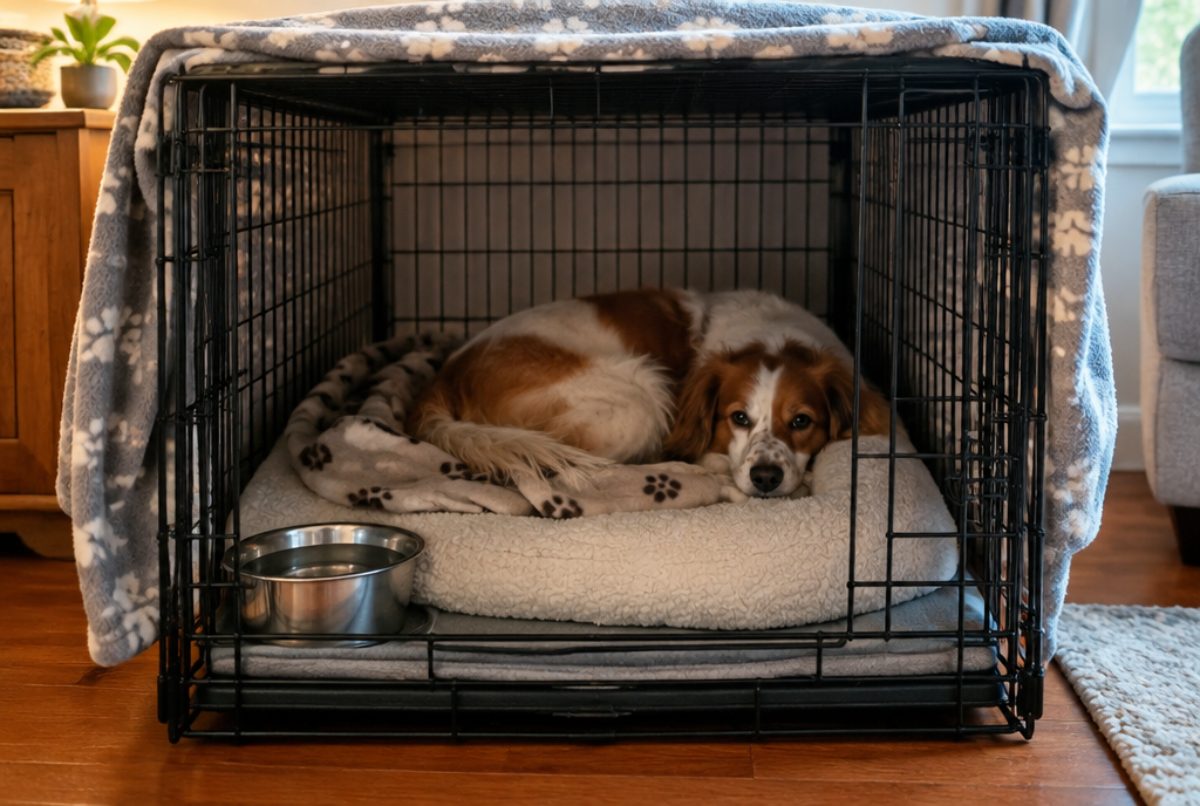
Treatment options depend on your dog's exam findings, neurological function and how much spinal cord damage is suspected. Mild cases, usually a first episode with mild signs, are often managed with conservative treatment: strict crate rest, pain medication and sometimes muscle relaxants. Restricting movement is a major part of care because even one active moment can worsen the disc injury and increase pain.
When a dog cannot walk well, has advanced weakness or shows complete paralysis, surgery is often recommended. MRI or CT helps find the affected disc first, and the surgeon removes a small window of bone (often a hemilaminectomy) to take out the disc material pressing on the cord. The odds depend on whether your dog can still feel pain in the legs:
| Your dog's condition | Regain use of the legs after surgery | With strict medical management |
|---|---|---|
| Pain feeling present | About 90% | 60% to 80% |
| Pain feeling completely lost | 50% to 60% | Under 10% |
Source: American College of Veterinary Surgeons.
Waiting too long can lower the best chance of recovery because the spinal cord may suffer ongoing compression. Whether your dog has rest or surgery, home care afterward plays a big role in healing.
What Does IVDD Recovery Look Like at Home?
Recovery plans usually begin with crate rest and close supervision. After surgery, most dogs go home within 3 to 7 days and need strict exercise restriction for at least 4 weeks. Your dog may need help standing, going outside or changing position, and some dogs need their bladder expressed 3 to 4 times a day until they can urinate on their own. Soft, well-padded bedding helps prevent pressure sores. Pain management continues at home, and your veterinarian may limit stairs, jumping, furniture access and play with other pets.
As healing progresses, physical rehabilitation may be added. Some dogs benefit from guided home exercises, gradually longer walks, underwater treadmill work or laser therapy, and Cornell's team also uses electroacupuncture for extra pain control. Improvement can continue for weeks to months, and medical management usually takes longer than surgical recovery.
Tip: IVDD can come back. The ACVS reports recurrence in about 25% of dogs, often at a different disc later in life, so ramps, a harness and a lean body weight stay important after recovery. Our tips on supporting senior dogs with mobility loss can help you set up a safer home.
Recovery takes patience, but many families want to know what life can still look like long term.
Can a Dog With IVDD Still Have a Good Quality of Life?
Yes, many dogs with IVDD can still have a good quality of life, especially in mild cases or when treatment starts early. Dogs with manageable pain, preserved mobility and a good response to pain medication often return to enjoyable daily routines. Ongoing veterinary care, a safe home setup, weight control and low-impact activity can all help protect comfort and function.
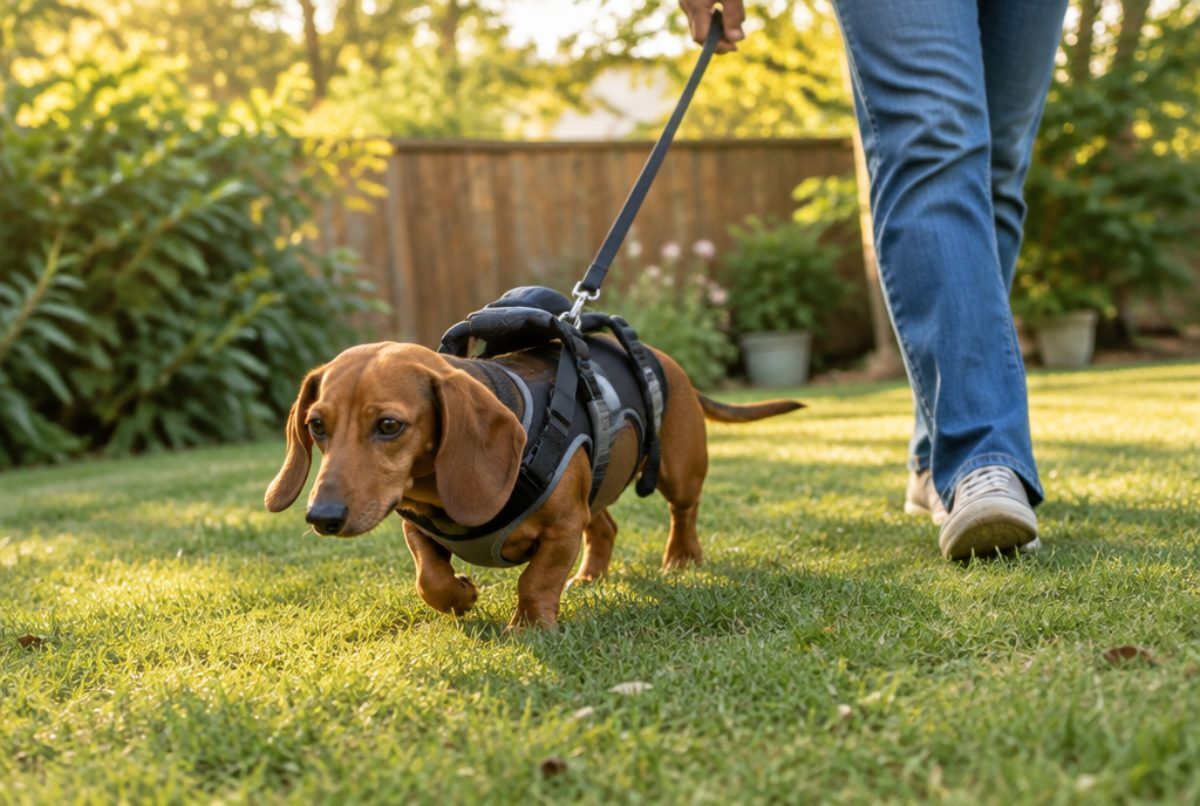
That said, quality of life depends on more than whether a dog survives the episode. You need to look at pain, mobility, bladder and bowel control, appetite, rest and your dog's ability to engage with family life. The ACVS lists longer-term problems some dogs face, including a persistent wobbly gait, dragging toes, repeated urinary tract infections, urine scald and pressure sores. Our quality of life checklist can help you track good days and bad days. Some dogs do well with rehabilitation and support devices if function does not fully return. Others face severe cases that bring families to a much harder decision.
A good day for a dog with IVDD is one with little pain, interest in food and family, and a body that still lets them rest comfortably.
When Is It Time to Say Goodbye to a Dog With IVDD?
It may be time to say goodbye when your dog has severe IVDD with pain that medication no longer controls, ongoing distress, repeated decline, or a level of disability that no longer allows an acceptable quality of life despite veterinary care. Complete paralysis, loss of bladder or bowel control, failure to improve after treatment, and the loss of deep pain feeling (when surgery is not an option) can all weigh heavily in that decision. Prognosis is best when treatment happens early and before deep pain feeling is lost.
Signs that your dog's comfort may be slipping include:
- Pain that breaks through medication, with crying, panting or trembling
- No longer eating or showing interest in favorite people and things
- Pressure sores, urine scald or infections that keep coming back
- More bad days than good days over a week or two
This choice is never simple, but it can be kind when suffering is no longer manageable. If you are unsure, a quality of life consultation with an Honor Pet veterinarian gives you time to ask questions and talk through your options before a crisis.
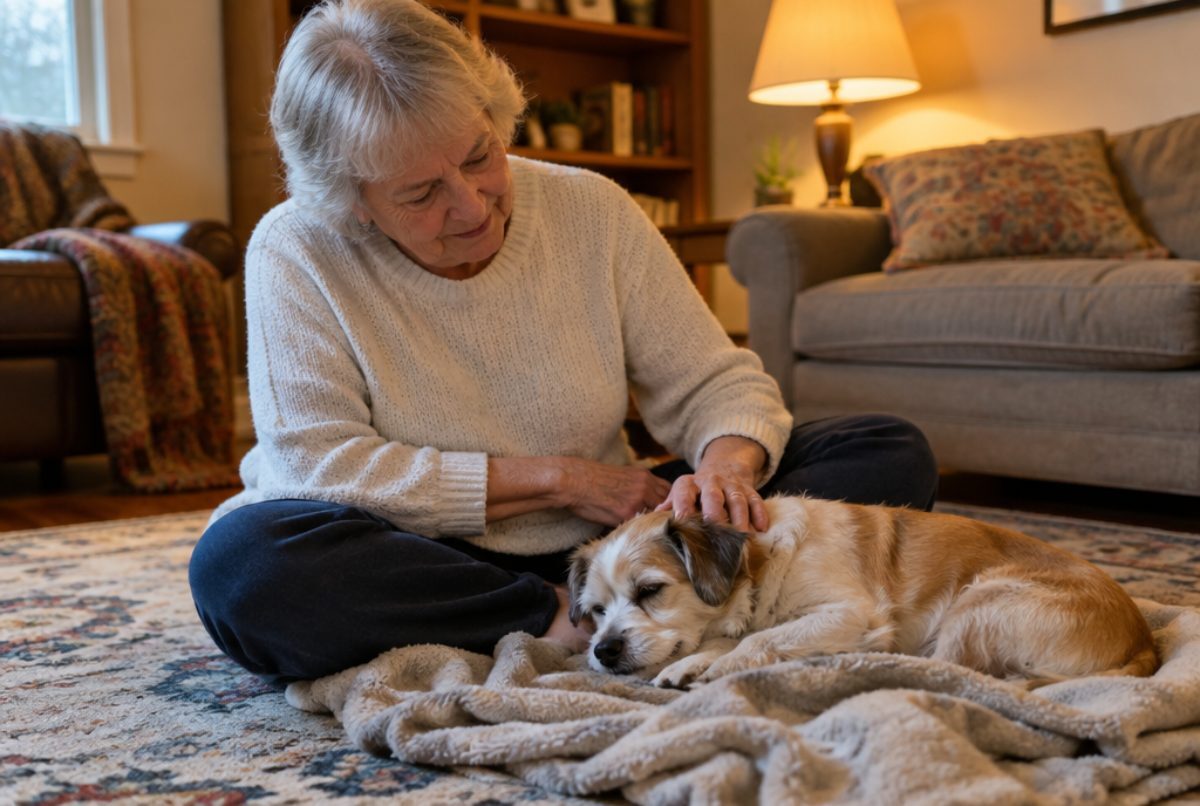
If euthanasia becomes the most compassionate path, some families prefer a peaceful home setting. Honor Pet offers in-home euthanasia and euthanasia at our Comfort Center in Los Angeles and surrounding areas. A calming sedative helps your dog relax and fall asleep first, and only then is a second medication given, so you can hold your dog and say goodbye without rushing. Afterward, gentle water cremation is available. Before that point, clear guidance from your veterinarian remains essential.
Planning Ahead and Caring for Yourself
IVDD can change quickly, so it helps to think ahead while your dog is comfortable. Talk with your veterinarian about what you would do if your dog stopped walking again, how much treatment feels right for your dog and your family, and where you would want a goodbye to happen. Our guide on how to prepare for in-home pet euthanasia walks through the practical steps.
Caring for a dog through a spinal injury is tiring and emotional, and grief can begin long before a goodbye. You do not have to carry it alone. Honor Pet's pet loss support is led by a licensed clinical social worker and includes support groups where you can talk openly with others who understand.
Is IVDD taking a toll on your dog?
Our veterinarians can help you understand your dog's quality of life and plan a gentle goodbye when the time comes, at home or at our Comfort Center.
Talk to Honor Pet or call (323) 515-1234
To keep a lasting memory of your dog, a clay paw print or a fur clipping can preserve a small, touchable part of them. The Honor Pet store also offers urns from $25 to $295.
Frequently Asked Questions
What are the average costs of IVDD treatment and surgery for dogs?
Costs vary widely by region, severity and the veterinary hospital. Medical treatment with strict rest and medication is usually less expensive than surgery, which also involves MRI or CT imaging, a hospital stay, follow-up visits and often rehabilitation. Ask your veterinarian for a written estimate for each treatment option so you can compare them.
Can my dog recover fully from IVDD without surgery?
Some dogs can recover well without surgery, especially with conservative treatment for a first, mild episode. According to the ACVS, 60% to 80% of dogs that still feel pain in their legs regain their use with strict medical management, compared with about 90% after surgery. Dogs that have lost all pain feeling are much less likely to recover without surgery (under 10%).
Can a dog with IVDD be put to sleep at home?
Yes. When pain management no longer provides enough relief and quality of life is poor, many families choose in-home euthanasia so their dog does not have to travel while in pain. Honor Pet's veterinarians come to your home throughout Los Angeles and surrounding areas. In-home euthanasia is $550, or $300 at our Comfort Center.
How long does IVDD recovery take in dogs?
Recovery usually takes weeks to months. After surgery, dogs typically need strict exercise restriction for at least 4 weeks, followed by gradual rehabilitation, and medical management often takes longer than surgical recovery. Your veterinarian will adjust the plan based on how quickly your dog regains strength and control.
Can IVDD come back after surgery?
Yes, it can. Surgery treats the affected disc causing the current problem, but it does not stop disc degeneration elsewhere in the spine. The ACVS reports recurrence in about 25% of dogs, often at another disc later in life, which is why long-term weight and activity management still matter.
Is IVDD painful for dogs?
Yes, IVDD can be very painful. Dogs may show anything from mild discomfort and stiffness to severe pain with crying out, panting, trembling or refusing to move. Prompt pain medication and pain management are important, because untreated spinal pain can sharply reduce comfort and overall quality of life.