
Introduction
Yes, you can turn your pet's ashes into stones. A solidification process reforms cremated remains into smooth, solid keepsakes you can hold, share and keep close. Honor Pet offers this as Solidified Remains – Parting Stone. For many families it feels more personal than an urn and more tangible than other keepsakes.
Key Takeaways
- A solidifying process turns your pet's cremated ashes into smooth memorial stones.
- The stones are made from the ashes, not simply stored beside them.
- Most families receive a small set they can hold, place around the home or share.
- Honor Pet offers it as Solidified Remains – Parting Stone at $1,195, with processing in 6–8 weeks.
- You get an average of 5–40 stones, and ashes from an earlier cremation still qualify.
- Decide before you send whether you want to keep part of the ashes back.
If you are looking for a lasting memorial for a beloved pet, this guide explains what memorial stones are, how they are made, what they look like and what to weigh before choosing them.
What Does It Mean to Turn Pet Ashes Into Stones?
Turning pet ashes into stones means changing cremated remains into solid, touchable forms instead of storing them loose in a container. These cremation stones are made from the ashes themselves, so the result feels close and personal.
For many pet owners, this is a special way to honor a beloved companion's unique personality. Depending on the process, a small amount or the full amount may be used. The next sections explain how families can turn a pet's ashes into memorial stones and why this option feels meaningful.
How do pet ashes become memorial stones?
In simple terms, the ashes go through a solidifying process. The cremated remains are first cleaned to remove small impurities. After that, they are bound into a clay-like material, shaped, and fired until they become stable cremation stones.
The technology is specialized, but the result is easy to understand. Instead of loose ash in a box, you receive smooth stones that can sit in the palm of your hand. They often resemble polished river pebbles, with natural shades such as gray, white, sage, bronze, or blue-gray.
That physical connection is what makes the process stand out for many grieving families.
Why do some families choose pet memorial stones?
Some families want more than storage. They want a lasting tribute they can touch, carry, or place somewhere meaningful. Memorial stones change the ashes of a pet into something active in daily life rather than something sealed away.
That difference can become a real source of comfort. One person may keep a stone on a nightstand, while other family members keep one in a pocket, garden, or memory space. This can feel gentler than asking one person to hold all responsibility for the remains.
- Memorial stones can be shared among family members.
- They are easy to hold during hard moments.
- They create a lasting tribute without loose ash or dust.
For some people, that balance feels right: not hidden, not overwhelming, just present.
What types of stones can be made from pet cremation ashes?
The most common result is a set of smooth stones made from cremated remains. These are usually rounded, natural-looking, and sized from small pebbles to pieces that fit comfortably in your hand. Their color and shape vary from pet to pet.
Some families also compare cremation stones with other memorial forms. A memorial diamond turns carbon into a gemstone, while glass keepsakes place a small amount of ash into decorative art. Those options are different from solidified stones, which are meant to feel simple and organic.
- Smooth stones are the most direct stone-style memorial.
- Glass keepsakes are artistic and display-focused.
- A memorial diamond is jewelry-based and usually much more expensive.
The style you choose depends on how you want to remember your beloved companion.
Key Takeaways for Pet Parents Considering Memorial Stones
For pet owners, memorial stones offer a practical and emotional middle ground between cremation urns and scattering. You can turn a pet's ashes into stones by sending remains through a mail-in process that usually starts with a collection kit.
This option works best when you want a tactile memorial you can share, hold, or place in several locations. It also helps to decide early whether you want all of the pet's ashes used or whether you prefer to keep some separately. Below are the key points to weigh before choosing this path.
What should you know before choosing solidified remains?
Start with the basics. Ask how much of the ashes will be used, what the timeline looks like, and whether the service includes a collection kit. These details shape the whole experience.
It also helps to be clear about permanence. Solidified cremation stones are meant to replace loose ash with a finished form. If you want to keep some ashes for an urn, jewelry, or scattering, set that portion aside before the process begins.
- Confirm whether all ashes or only part will be used.
- Ask how the collection kit works and how shipping is handled.
- Understand that specialist equipment and kiln-firing are part of the process.
These points can spare you second thoughts later. A calm decision now often makes the memorial feel more comforting when it returns to you.
Are memorial stones a lasting tribute for pets?
Yes, memorial stones can be a lasting tribute. Once the ashes are reformed and fired, they become stable, solid keepsakes that do not have the loose texture of ash. That makes them easier to handle and display over time.
Many families value them because they feel durable without feeling formal. You can keep them on a shelf, place one in a memory box, or hold one in your hand when you miss your beloved companion. They can become part of everyday life.
Visually, they usually look like smooth natural pebbles rather than shiny ornaments. That simple appearance is part of their comfort. If you want a lasting memorial that feels calm, grounded, and easy to live with, memorial stones can be a strong fit.
Top reasons to select this memorial option for your pet's ashes
Every family remembers differently. Some want a shelf display. Others want something they can hold. For many, these final stones feel like a unique way to stay connected without needing a large memorial object in the home.
They can also reflect your pet's unique spirit in a quiet, natural form. That matters if your dog or cat was woven into daily routines and you want remembrance to feel close rather than ceremonial.
- Final stones can be shared among family members.
- They fit daily life better than many larger memorial items.
- They offer a unique way to remember a pet's presence.
If closeness, simplicity, and shared remembrance matter to you, this option may feel right.
What is the Process for Turning Pet Ashes into Stones?
The process is usually done by mail. You send cremated ashes using a collection kit, the remains are processed, and the finished stones are mailed back to you.
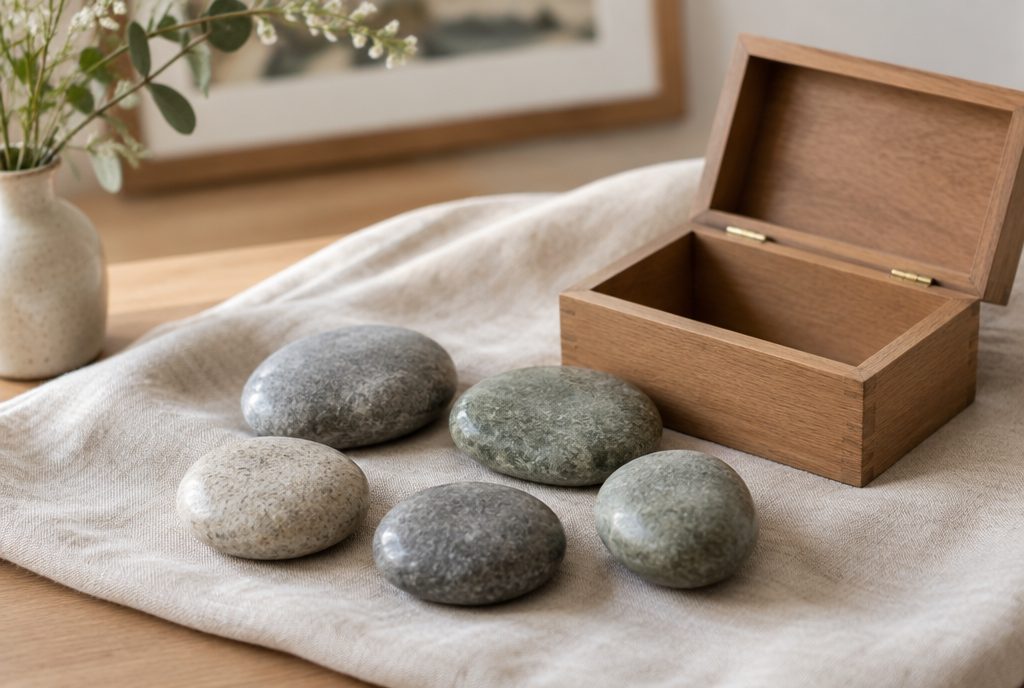
While the steps involve specialized handling, the experience is straightforward from a family's point of view. You prepare the ashes, ship them securely, wait through production, and receive the stones in a keepsake presentation. Here is a clearer look at how it works from start to finish.
How are pet cremation ashes solidified into stones?
It starts with your pet's ashes after flame cremation or water cremation. The remains are prepared and cleaned so small impurities do not affect the final result. This first step is important because it helps create a smoother, stronger finish.
Next, the ashes are combined into a workable material, shaped into stone forms and then heated in a kiln. That heat changes the texture and stability of the material so it becomes solid rather than powdery.
At the end, the cremation stones come back as the pet's ashes in a new form. They are not containers and they are not decorative filler. For many families, that distinction matters because the stones feel like a direct physical connection to their pet.
Step-by-step overview of the stone-making process
If you like knowing what comes next, a simple sequence can help. Most families experience it as a series of clear steps rather than something mysterious or technical.
- You receive or request a collection kit for the ashes.
- You package and send the remains through the mail-in service.
- The ashes are cleaned, formed, fired and polished.
- The final stones are returned in a keepsake box or similar presentation.
From your side, the process is mostly about shipping and waiting. Behind the scenes, trained staff manage the transformation from ash to stone. That makes this memorial feel both personal and carefully handled, which can be reassuring during a difficult time.
How long does it take to receive pet memorial stones?
Processing typically takes 6–8 weeks, with step-by-step tracking so you know where your pet's remains are throughout.
That means this is not an immediate memorial. If you need something right away, an urn or paw print may fill the gap while you wait for the final stones. Still, many families find the wait manageable because the process is clear and the result is distinctive.
Tip: Ask how you will be updated while you wait. Clear expectations and responsive service matter as much as the finished stones, especially in the first months of grief.
How Much Pet Ash is Needed for a Memorial Stone?
The amount needed depends on the memorial you choose. Some stone-style keepsakes use a small amount, while full solidification uses all or most of the ashes you send in.
That is why this question matters early. Before you request a collection kit, decide whether you want one main memorial, several shared keepsakes, or part of the ashes reserved for other uses.
Typical quantity of cremation ashes required
Full solidification returns the whole amount of remains in stone form — an average of 5 to 40 stones depending on the volume provided. Smaller pets produce fewer. Each set varies naturally in shape, color and texture.
What matters most is whether the service uses all ashes or a portion. That decision affects cost, sharing, and whether you can keep some remains in other forms. Ask before you order a collection kit.
| Memorial approach | Amount of ashes used | What you usually receive |
|---|---|---|
| Full solidification | Most or all ashes sent in | Multiple stones of similar total volume |
| Keepsake art using ashes | Small amount | One or a few display pieces |
| Jewelry-style memorial | Very small amount | A small wearable keepsake |
Because methods vary, always confirm the exact amount required before mailing anything.
What if I have only a small amount of pet's ashes?
You still have options. A small amount can work for certain keepsakes, especially if your goal is one personal item rather than a full set of stones. The key is to confirm what the service accepts before you request a collection kit.
This is especially helpful if you are keeping ashes in an urn, sharing them among family members, or saving some for scattering later. You do not have to give up every memorial idea just because the quantity is limited.
- Ask whether a small amount is enough for the style you want.
- Decide in advance how much you are comfortable keeping versus sending out.
That clarity can help family members feel included and reduce stress. A smaller quantity does not make the memorial less meaningful.
Can hair or fur also be used instead of ashes?
True cremation stones are made from ashes, not hair or fur. The remains are cleaned, formed and fired into smooth stones, and that process relies on cremated material.
Hair and fur may still be important in other memorial forms. Families often keep them with collars, paw print kits, or memory boxes because they feel personal and familiar. That can be a unique way to preserve connection, especially for children or other family members.
If you are thinking about making something at home, remember that true ash-to-stone memorials rely on a professional process. DIY memorial stones made from concrete or clay are different. They can be meaningful, but they are not the same as cremation stones created from ashes.
What Do Pet Memorial Stones Look Like?
Most pet memorial stones look like polished river pebbles. They are simple, smooth, and natural rather than flashy, which is part of why many families find them calming.
Their appearance varies with each pet, and that variation can feel fitting. Unlike pet cremation jewelry, which is worn or displayed as an accessory, these stones are meant to be held, carried, or placed in a quiet spot.
Common shapes, colors, and sizes available
In most cases, memorial stones are rounded and organic in shape. They are not usually cut into sharp geometric designs. Instead, they resemble smooth stones you might find near water, which gives them a natural and soothing feel.
Colors are also natural: soft grays and whites are common, with some stones appearing sage green, bronze, or blue-gray. Size can range from small pebbles to larger pieces that sit comfortably in your palm.
- Small stones are easy to carry or share.
- Larger smooth stones are better for display or holding during reflection.
This natural variation is part of their appeal. It offers a unique way to remember a pet without forcing the memorial into a polished, manufactured look.
Can pet ashes be turned into diamonds or other gemstones?
Yes, pet ashes can be turned into a memorial diamond or other gemstone-style keepsake, but that is a different process from stone solidification. Gem options focus on carbon conversion and jewelry, not on creating smooth natural pebbles from the remains.
Because the method is more specialized, it usually costs considerably more than stone solidification. That makes it a very different decision financially and emotionally.
If you want something wearable, cremation jewelry or a memorial diamond may appeal to you. If you want something grounded and touchable without a jewelry setting, solidified stones are often the simpler choice.
Ways to keep, carry, and share your pet's memorial stones
One reason families like cremation stones is flexibility. You can keep them in several places without needing one main display. That makes them easier to live with than keeping everything in a single container.
Some people place one on a nightstand, tuck one into a bag, or set one in a garden. Others divide them among family members so each person has a part of the memorial. This can feel gentler than scattering ashes all at once.
- Keep one in a memory box or near photos at home.
- Share one with family members who want a private keepsake.
- Place one in the garden, or beside a plant you tend for them.
Unlike pet memorial jewelry, stones do not need clasps, chains, or a setting. They work because they are simple to hold and easy to place where comfort is needed.
Comparing Memorial Stones, Urns, and Other Options
Pet owners have more memorial choices than ever. Cremation urns, memorial jewelry, glass keepsakes, and stones all offer different ways to stay connected — our guide to unexpected ways to memorialize your pet covers several more.

The best option depends on how you want to remember your pet. Do you want something to hold, something to display, something to wear, or something to place outdoors? Looking at each option side by side can make the choice feel less overwhelming.
Benefits of choosing solidified stones versus urns
Cremation urns are familiar and practical. They keep ashes together in one place and can be displayed with photos or collars. For some families, that is exactly right.
Solidified stones offer a different experience. Instead of holding remains inside a vessel, the remains return as touchable objects. That can feel like a more active way to keep a pet present in daily life. It also removes the worry some people feel about opening or moving an urn.
- Solidified stones can be handled without loose ash.
- They can be shared more easily than a single urn.
If your goal is a lasting memorial you can touch and divide, stones have clear strengths. If your goal is one formal home display, an urn may still be the better fit.
Pet memorial jewelry and artistic keepsakes: alternatives explained
Memorial jewelry is designed for closeness in a wearable form. Pet cremation jewelry often holds a tiny amount of ash in a pendant, ring, or other setting. It can be comforting if you want to keep your pet with you through the day.
Artistic keepsakes work differently. Glass keepsakes place a small amount of ash into decorative art such as orbs or touchstones. These pieces are more about display and beauty than daily handling.
- Choose memorial jewelry if wearing the memorial matters most.
- Choose glass keepsakes if you want a visual art piece for the home.
Compared with both, solidified stones feel more natural and less formal. They sit in a middle space between display and touch, which is why many families find them easy to live with.
How to pick the right memorial for your family and pet
Start by thinking about daily life. Where will the memorial live? Who wants access to it? How comfortable are you with keeping your pet's ashes in one place versus sharing them? These questions matter more than trends.
Then think about your pet. A quiet dog who loved the garden may suit memorial stones placed outdoors. A cat whose photo already anchors your living room may feel right with an urn beside it. A family that wants several keepsakes may lean toward stones or jewelry.
- Pick memorial stones if touch and sharing matter most.
- Pick an urn or jewelry if one display point or wearable closeness feels better.
There is no single best way. The right memorial is the one your family can live with gently.
Are There Eco-Friendly Memorial Stone Options?
Yes. Families often look at the memorial itself, the materials used, and whether the ashes come from water cremation rather than flame cremation.
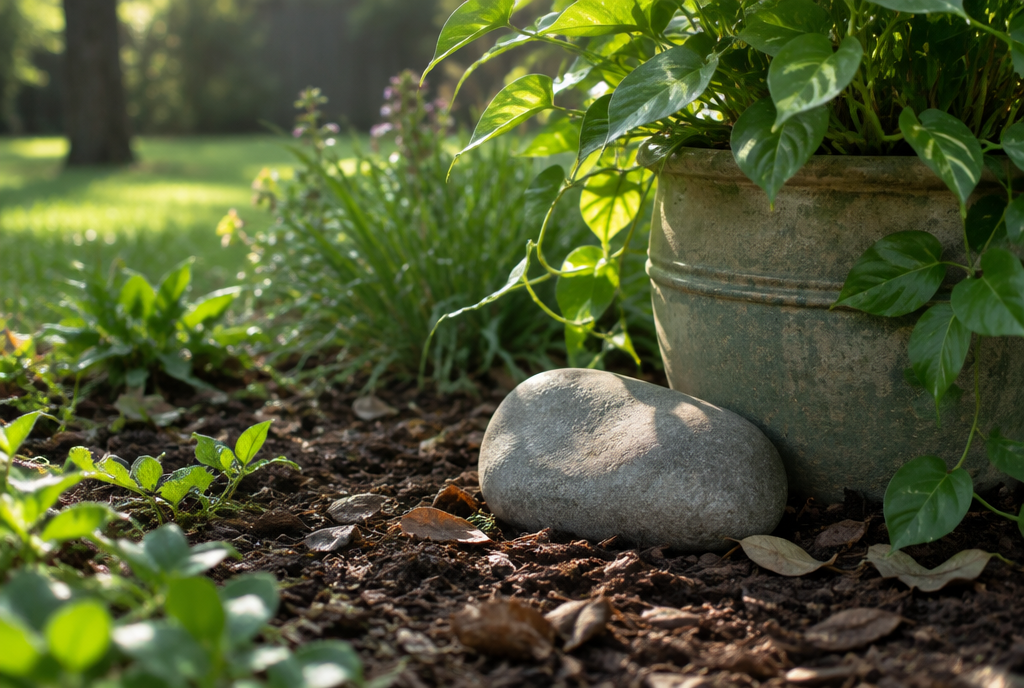
That can shape a greener overall plan, especially if you also want a pet memorial garden or living memorial. You can make practical choices that reduce excess materials and keep the memorial simple.
Sustainable materials and natural stone alternatives
If eco-friendly choices matter to you, start by looking at materials and purpose. A simple memorial that avoids excess packaging, heavy decoration, or nonessential add-ons may align better with your values than a more elaborate keepsake.
Some families also pair ashes with natural stone markers or garden placement rather than a highly processed display piece. Others build a living memorial around the stone, such as placing it near a tree, planting bed, or quiet corner of the yard.
- Choose sustainable materials where possible for boxes or display items.
- Use a natural stone setting or garden placement to keep the memorial simple.
These choices do not change the love behind the memorial. They simply help you honor your pet in a way that feels more grounded.
How water cremation can help create eco-conscious stones
Solidification can work with remains from water cremation, also called aquamation, not only flame cremation.
That matters because some families choose water cremation specifically for environmental reasons: it uses about 90% less energy than traditional cremation. If that is your starting point, memorial stones may continue the same intention.
For families in Los Angeles and Orange County thinking ahead, gentle pre-planning around aftercare can make later memorial choices feel less rushed. Asking early about compatibility between water cremation and memorial stones is worth doing.
Tips for creating a green pet memorial
A green pet memorial does not have to be complicated. Often, the simplest ideas are the most comforting. Think about what will last, what you will actually use, and what will feel peaceful a year from now.
A pet memorial garden can work beautifully with stones, especially if you want a quiet outdoor place to remember your pet. A living memorial can also soften grief because it gives you something to tend, not just something to look at.
- Place a memorial stone in a small pet memorial garden.
- Add a plant, tree, or container garden as a living memorial.
- Limit extra decor and choose eco-friendly materials where you can.
When you keep the memorial simple, it often feels more personal and easier to maintain.
What Does It Cost to Turn Pet Ashes Into Stones?
Solidification costs well above a basic urn and below a memorial diamond. Through Honor Pet, Solidified Remains – Parting Stone is $1,195 and returns the full amount of your pet's remains.
That price shifts based on size, volume, shipping, and extras. Ask what is included, whether there is any additional cost for larger animals or upgrades, and whether shipping and payment options are available.
Factors that affect the price and what's included
Several factors shape the final price. The biggest one is volume. Larger pets produce more remains, and that usually means more work during processing. The specialist equipment involved also places this service above simple storage memorials.
Included items matter too. A quote may cover the transformation itself, while shipping, return packaging, or upgraded presentation could affect the total.
- Ask whether the quote includes the collection kit, return shipment, and packaging.
- Check if large pets, rush handling, or premium presentation create additional cost.
A clear written quote is worth getting. It helps you compare options fairly and avoid surprises during an already emotional decision.
Average cost ranges in the United States
Here is a simple side-by-side view of typical US pricing:
| Memorial option | Typical price range | Notes |
|---|---|---|
| Basic urn | About $25 to $300 | Lower-cost home display |
| Cremation jewelry | About $50 to $500 | Holds a very small amount of ashes |
| Solidified stones (Honor Pet) | $1,195 | Returns stones you can hold and share |
| Memorial diamond | About $2,000 to $20,000+ | Highest-cost jewelry memorial |
If you are budgeting, compare function as much as price. The cheapest option is not always the one that feels most supportive.
What is included, and what to ask
Through Honor Pet the $1,195 covers solidifying the full amount of remains and returning them in protective packaging, with tracking along the way. At checkout you can choose pickup at the Comfort Center or shipping to your home.
If you are unsure about anything — timing, how much to send, or keeping part of the ashes back — ask the care team before you order. A kind, clear answer often tells you as much about the experience as the product itself.
Memorial Options You Can Arrange With Honor Pet
You can order solidified remains directly from Honor Pet: Solidified Remains – Parting Stone, $1,195, with a return-to-ash satisfaction guarantee, individual batch processing and an anytime money-back guarantee. Honor Pet also cares for families across Los Angeles and Orange County with in-home and Comfort Center euthanasia and water cremation, an eco-conscious process that uses about 90% less energy than flame cremation.
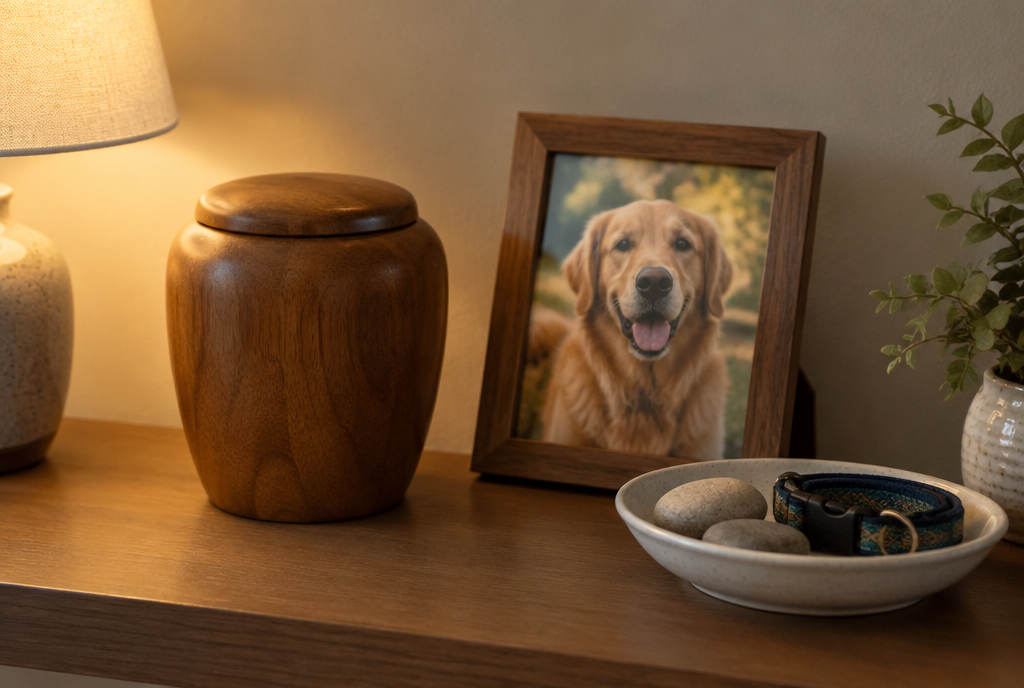
When your pet's ashes come home, they arrive in a curated Honor Box with meaningful keepsakes, so you have time to decide what feels right rather than choosing under pressure. If grief is heavy right now, pet loss support is there too.
Not sure what to choose yet?
You do not have to decide today. Keep your pet's ashes safely at home, talk it through with your family, and choose the memorial when you feel ready. If it may be time soon, you can book a pre-planning consultation with a veterinarian who specializes in end-of-life care.
If you would rather have something in your hands now, the Honor Pet store has urns from about $25 to $295, cremation jewelry at $95 that holds a small portion of ashes or fur, and keepsakes such as paw prints and photo frames. Everything is personalized by hand, available for local pickup or shipping, and covered by a 30-day guarantee.
Conclusion
Turning your pet's ashes into stones can be a heartfelt way to honor their memory: a tangible tribute you can hold, place around your home, or share with the people who loved them too. Weigh the timeline, the cost and how much of the ashes you want used, and take your time. Whichever memorial you choose, the point is the same — keeping the love you shared close.
Frequently Asked Questions
Can I make pet memorial stones myself at home?
You can make DIY memorial crafts at home, but true cremation stones made from a pet's ashes require kiln processing and a professional collection kit. Homemade projects can still be meaningful, but they are different from solidified ash stones or cremation jewelry made through specialist methods.
How safe and durable are solidified pet ash stones?
Solidified cremation stones are designed to be stable, smooth, and easy to handle. They will not crumble like loose ash, which is part of why families find them comforting: the memorial is touchable without being fragile.
What should you ask a provider before you commit?
Ask what the collection kit includes, how long the process takes, how many stones you may receive, and what happens if you want to keep some ashes back. Also pay attention to how they communicate. Those details matter during grief.
How many stones will I get from my pet's ashes?
An average of 5 to 40 stones, depending on how much is sent in. Many families like this because the stones can be shared instead of kept by only one person.
Can I have stones made if my pet was cremated years ago?
Yes — it is never too late. Remains from an earlier cremation can be sent for solidification at any time.
Can I keep some ashes and turn only part into stones?
Yes, but decide before sending them. If keeping some ashes matters to you, set that portion aside first, then send only the rest. This works well when family members want different memorial options from the same pet.