
Introduction
A healthy adult cat should not go more than 24 hours without eating. According to Cornell University's Feline Health Center, a loss of appetite lasting as little as 24 hours can seriously affect an adult cat's health, and for a kitten younger than six weeks, just 12 hours without food can be life-threatening. If your cat has not eaten for a day, call your veterinarian.
Key Takeaways
- A healthy adult cat should not go more than 24 hours without eating, and you should call a vet if that happens.
- Loss of appetite can point to pain, stress, dental disease, or other health conditions.
- After a short time without food, a cat's body starts moving fat to the liver for energy.
- That process can lead to hepatic lipidosis (fatty liver), especially in overweight cats.
- Senior cats and kittens can decline faster than healthy adult cats.
- Watching drinking, energy, and behavior helps you act early.
If your cat has not eaten for 24 hours, treat it as a concern and contact your vet. A healthy adult cat may survive longer in theory, but waiting is risky because a cat's body can start to struggle quickly. Sometimes the reason is simple, like stress or a dislike of new food. Other times, it points to illness, pain, or a more serious problem. Knowing what to watch for helps you protect your cat sooner.
How Long Can a Healthy Adult Cat Go Without Eating?
A healthy adult cat should not go longer than 24 hours without food. Even if the amount of time a cat can technically survive is much longer, that does not mean it is safe. A missed meal may not always be an emergency, but a full day without eating is a red flag.
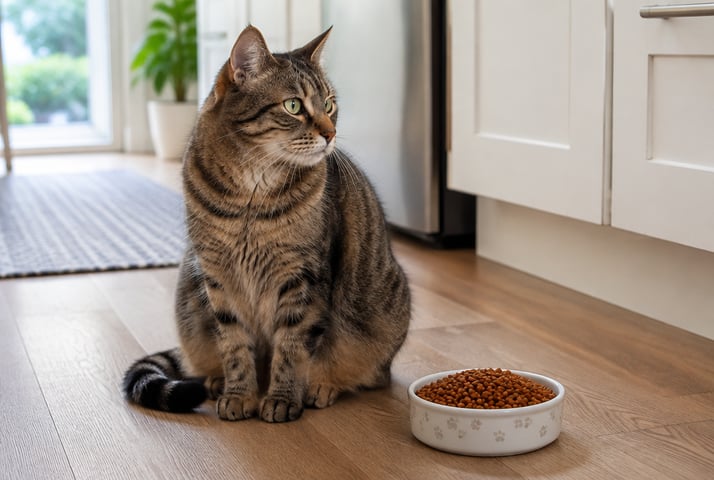
A cat that skips meals needs attention sooner than most owners expect.
Once loss of appetite lasts beyond that point, the strain on the cat's organs can build. Kittens, senior cats, and cats with illness are even more fragile. To see why that first day matters so much, look at what happens inside the body next.
What Happens During the First 24 Hours Without Food?
At first, your cat may simply seem picky, tired, or less interested in meals. Some cats skip food after stress, a change in routine, or a new environment. Even so, the cat's body still needs steady fuel.
As the hours pass, energy intake drops and the body starts adjusting. A cat may begin using stored resources to keep going. Body weight, age, and general health affect how well a cat handles this short fasting period.
The concern is that cats are not built to go long without regular nutrition. When they stop eating, fat reserves may start to be mobilized for energy. That shift can become dangerous if the problem continues, especially in cats with extra body fat or hidden disease.
Can a Cat Go Longer Than 24 Hours Without Eating Safely?
Technically, some cats can survive for days or even longer if water is available. Still, safe and possible are not the same thing. Once your cat passes the 24-hour mark without food, health risks rise and a vet call is the right step.
Cats get weaker as nutrition falls behind. A cat's health can decline faster if they are vomiting, having diarrhea, or drinking poorly at the same time. That is why a cat who has not eaten for over 24 hours needs prompt attention.
The danger is greater for kittens, senior cats, and those with underlying health conditions like kidney disease, diabetes, or hyperthyroidism. Overweight cats also carry a higher risk of fatty liver disease if they stop eating suddenly. Next, let's look at when the situation becomes an emergency.
"Cats never simply decide not to eat. A cat that stops eating is telling you something is wrong, and the safest response is an early call to your veterinarian."
When Is It an Emergency If My Cat Stops Eating?
Emergency: act now
Call your veterinarian or an emergency clinic right away if your cat has not eaten for 24 hours and is also very weak, vomiting repeatedly, not drinking, or having trouble breathing.
It is an emergency if your cat has not eaten for over 24 hours and also seems very weak, vomits repeatedly, or is not drinking. Cats with other health conditions can worsen faster, so waiting can be risky.
You should also act sooner if your cat is a kitten, a senior, or already medically fragile. Lack of food and water can put stress on the body and increase the chance of organ failure. The warning signs below can help you decide when immediate veterinary care is needed.
Warning Signs That Require Immediate Veterinary Care
Some cats just seem quiet when they feel unwell. Others show clear distress. If your cat refuses food for a whole day, do not wait to make a vet appointment if any other worrying signs appear.
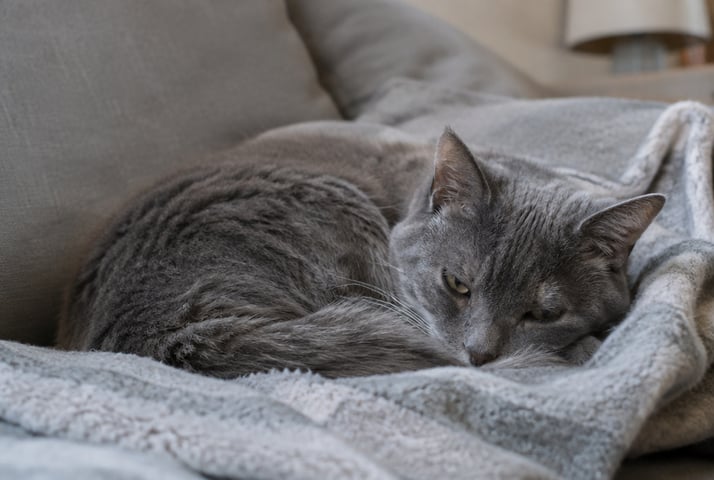
Hiding, low energy and not eating together are signs to call your vet.
Call for veterinary care right away if you notice:
- Difficulty breathing
- Severe lethargy or collapse
- Repeated vomiting
- Fast weight loss
- No drinking for over 24 hours
- Diarrhea along with poor intake
These signs can point to dehydration, pain, or underlying health issues that need prompt treatment. Trust your instincts too. If your cat looks clearly worse than usual, it is better to be seen earlier rather than later.
Risks of Hepatic Lipidosis and Other Complications
One major risk when a cat stops eating is hepatic lipidosis. This serious liver condition is also called fatty liver disease. When a cat stops eating, large amounts of fat move from the body's stores to the liver, and the liver cannot process it all, so fat builds up inside the liver cells.
Cornell's Feline Health Center explains that hepatic lipidosis is almost always preceded by a cat refusing food, that it is more common in overweight cats, and that it can be fatal if not treated promptly. In more than 90 percent of cases, it is triggered by another underlying condition. What looks like simple appetite loss can turn into a dangerous condition within days.
Signs can include lethargy, vomiting, avoiding the food bowl, drooling, rapid weight loss, and yellowing of the gums, ears, or eyes (jaundice). That is why a cat who has not eaten for over 24 hours should be checked before complications grow.
Why Do Cats Stop Eating? Common Causes and Concerns
Cats usually do not stop eating without a reason. Sometimes the cause is mild and short-lived, tied to cat behavior, stress, or a dislike of food changes. Other times, loss of appetite is one of the earliest signs of health issues.
You may notice your cat drinking water but ignoring meals, or refusing food after a disruption at home. Both emotional and medical problems can be involved. The next section breaks down common potential causes so you know what might be going on.
Medical, Emotional, and Environmental Reasons
Stress can make a cat stop eating. A household change, travel, conflict with another cat, or a shift in routine can affect appetite. Cornell even notes cats that lost their appetite after losing a feline companion. Some cats also turn away from meals after a flavor or texture change, including new food.
Medical issues are also common. A cat might drink water but avoid eating because chewing hurts, nausea is present, or illness is developing. Cats are good at hiding discomfort, so appetite changes matter.
Possible reasons include:
- Dental pain or dental disease
- Stress from changes in the home
- Kidney disease, pancreatitis, hyperthyroidism, or liver disease
- Vomiting, diarrhea, fever, or nausea
- Nasal congestion or other respiratory illness
How Age and Health Conditions Affect Eating Habits
Age changes how long a cat can safely go without food. Older cats may already have health conditions that reduce appetite or make dehydration more likely. Kittens have small reserves and can become weak far faster than adult cats.
Underlying health issues also shorten the safe window. Cats with kidney disease, diabetes, or hyperthyroidism may deteriorate faster if they stop eating. That means eating habits should always be judged in context, not by one rule for every cat.
| Cat group | Why risk is different |
|---|---|
| Healthy adult cats | A missed meal may be tolerated briefly, but over 24 hours without food is still concerning. |
| Older cats | Older cats may have reduced thirst, mobility issues, or illness that make poor intake more dangerous. |
| Kittens | They have limited energy reserves and developing bodies, so weakness and malnourishment can happen quickly. |
| Cats with underlying health issues | Illness can speed decline and increase the need for urgent veterinary attention. |
| Overweight cats | Extra fat does not protect them; it can raise the risk of hepatic lipidosis. |
What Should You Do If Your Cat Refuses Food?
If your cat starts to refuse food, watch closely and try simple ways to tempt eating. Offer familiar cat food, keep water available, and note any vomiting, diarrhea, or major behavior change. Good pet care starts with early observation.
Still, do not let a full day pass without action. If your cat has eaten nothing for 24 hours, call your vet for guidance and possible veterinary attention. Home steps can help in mild cases, but they should never replace an exam when the problem continues.
Safe Ways to Encourage Eating at Home
If your cat seems mildly off but is otherwise stable, gentle encouragement may help. The goal is to make food smell and feel appealing without forcing it. Many cats respond better to moisture-rich choices and calm feeding spaces.
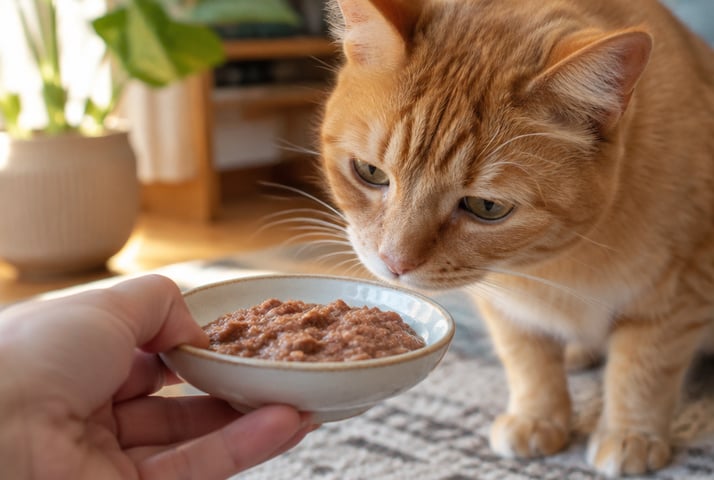
Small portions of strong-smelling wet food can tempt a reluctant cat.
Try these safe steps at home:
- Offer wet food instead of dry food
- Give small meals more often
- Refresh fresh water daily
- Use clean food bowls in a quiet area
- Try a water fountain if your cat prefers moving water
- Warm food slightly to boost smell
Tip
Don't force food into your cat's mouth. Cornell's veterinarians note that force feeding can make a cat's aversion to food worse. If gentle tempting doesn't work, let your vet take over.
If your cat still will not eat, or if more than 24 hours have passed, stop troubleshooting at home and contact your veterinarian.
When to Call Your Veterinarian and What to Expect
Call your vet if your cat has had little or nothing to eat for 24 hours. Make that call sooner for kittens, senior cats, or pets with underlying health issues. You should also reach out sooner if vomiting, diarrhea, or weakness is present.
During the vet appointment, your veterinarian will likely ask about eating, drinking, vomiting, body weight changes, and recent stress or food changes. A thorough exam usually includes a close look at the teeth and gums, since dental pain is a common reason cats stop eating.
In some cases, your cat may need supportive treatment, appetite stimulants, a feeding tube, or testing to find the cause. Early veterinary care matters because problems are often easier to manage before dehydration, liver stress, or other complications set in.
Special Concerns for Senior and End-of-Life Cats
Senior cats deserve extra attention when appetite changes. Many have health conditions that affect eating, drinking, mobility, or comfort, such as kidney disease or cancer. Because of that, they may become weak faster than younger adult cats.
In end-of-life situations, loss of appetite can be part of a broader decline tied to organ failure or advanced disease. Families often wonder what the right choice is when a cat no longer wants food. The next sections can help you think through comfort, timing, and when to ask for veterinary help.
How Long Can Older or Terminally Ill Cats Go Without Eating?
Senior cats and terminally ill cats should not be expected to handle fasting like a healthy adult cat. Their bodies often have less reserve, and their health risks rise faster when intake drops. Even a short period without food can matter.
Body weight does not always tell the full story. A thin old cat may weaken quickly, while an overweight cat may face greater danger from fatty liver changes if appetite suddenly stops. Either way, prompt veterinary guidance is important.
If your older cat is eating much less than usual, seems withdrawn, or has ongoing illness, contact your vet before waiting a full day if possible. In fragile cats, the safest answer is almost always sooner care, not later care.
Supporting Comfort, Nutrition, and Quality of Life
When a cat is older or nearing the end of life, the focus may shift from ideal nutrition to comfort and quality of life. That does not mean food stops mattering. It means you work with your vet to keep eating as gentle and stress-free as possible.
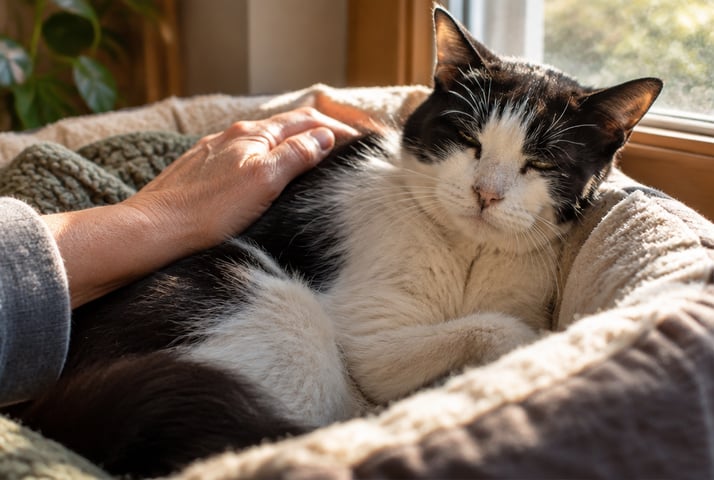
A warm, quiet resting spot supports comfort for senior and ill cats.
Helpful approaches may include:
- Offering wet cat food for smell and moisture
- Serving small meals instead of full portions
- Keeping food and water close to resting areas
- Watching for signs of pain, nausea, or breathing trouble
A cat who is shutting down may eat less, sleep more, lose weight, or seem less interested in the world. These changes should lead to a thoughtful talk with your veterinarian about comfort, support, and next steps. Honor Pet's quality-of-life checklist for pets near end of life can help you track these changes.
When Is It Time to Consider Saying Goodbye?
This is one of the hardest questions pet families face. For senior cats at the end-of-life stage, appetite loss is often only one part of the picture. Breathing changes, ongoing weakness, repeated vomiting, major weight loss, and poor comfort all matter.
If your cat no longer enjoys food, struggles through each day, or cannot stay comfortable even with support, it is time to ask for veterinary help. You do not have to figure out the right choice alone. A compassionate vet can help you assess what your cat is experiencing. The American Veterinary Medical Association also encourages owners to talk openly with their veterinarian about euthanasia so they understand the process.
At Honor Pet, we know these moments are deeply personal. Families often need clear, kind guidance when eating stops and decline continues. Reaching out early can give you space to make calm decisions centered on your cat's comfort. Many cats find travel stressful, so Honor Pet offers gentle euthanasia at home or in our Comfort Center in Los Angeles and Orange County. You can also read about how euthanasia differs for cats and dogs and how to prepare for in-home pet euthanasia.
How Long Can Kittens Go Without Food Compared to Adult Cats?
Kittens cannot go as long without food as adult cats. Cornell's Feline Health Center notes that for a kitten younger than six weeks, going just 12 hours without food can pose a lethal threat. Older kittens may survive longer in theory, but they can become weak, malnourished, and ill much sooner than adults, which is why appetite changes in kittens need fast attention.
Compared with adult cats, kittens have smaller bodies, fewer reserves, and higher nutritional demands. Their health risks climb quickly when they stop eating or drinking. If your kitten has skipped meals or stopped drinking, call a vet right away.
Can Cats Survive Longer Without Food or Water?
Cats generally survive longer without food than without water. A cat may live for days without eating, especially if water is available, but the health danger starts much earlier than survival numbers suggest.
Without water, dehydration can begin within 24 hours. That puts stress on the body fast. Cats eating wet food may get some moisture from meals, while cats on dry food rely more on the water bowl. No matter the diet, fresh water every day helps lower the risk of dehydration.
Symptoms of Dehydration and What to Watch For
A cat that is not eating may also be taking in less water, especially if they usually eat wet food. That is one reason poor appetite can become dangerous fast. The risk of dehydration goes up further in hot weather or if vomiting and diarrhea are present.
Watch for these signs of dehydration:
- Sunken eyes
- Reduced skin elasticity
- Lethargy or weakness
- Panting
- Rapid heart rate
- Decreased urine output
If you see these signs, contact your vet promptly. Dehydration stresses the organs and can contribute to serious decline. Even if your cat is drinking some, unusual thirst or very low intake can both point to a medical problem that needs attention.
Planning Ahead, Grief Support and Final Thoughts
Watching a cat stop eating can feel scary, confusing, and heartbreaking. For pet parents, the most important step is simple: if your cat has not eaten for 24 hours, seek veterinary care. Early help can prevent complications, clarify what is causing the change, and protect comfort.
If your cat is older or seriously ill, planning ahead can make an overwhelming time feel a little less lonely. Honor Pet's pre-planning and quality-of-life consultations let you talk through options with a veterinarian who specializes in end-of-life care, including aftercare choices such as eco-conscious water cremation. Pet loss support is also available before and after your cat's passing.
Frequently Asked Questions
What Should I Feed a Cat That Hasn't Eaten for More Than 24 Hours?
Offer wet cat food, small meals, and fresh water in a quiet space. You can warm the food slightly to improve smell. If the cat's appetite does not return after 24 hours, assume there may be a health problem and call your vet.
How Quickly Can Hepatic Lipidosis Develop If My Cat Isn't Eating?
Hepatic lipidosis can develop within days of a cat not eating enough, and overweight cats face higher risk. This liver condition, also called fatty liver disease, can be fatal without prompt treatment, which is one reason any cat not eating for over 24 hours needs veterinary attention.
What Signs Suggest My Cat Is Shutting Down at the End of Life?
Common signs include loss of appetite, marked weight loss, severe weakness, hiding, and difficulty breathing. These changes may happen with advanced disease or organ failure. If you notice them, your cat needs prompt veterinary attention and a compassionate quality-of-life discussion.
Why Is My Cat Drinking Water but Not Eating?
A cat may drink water but avoid food because of dental pain, nausea, stress, or other health issues. Sometimes cat behavior plays a role, but medical issues are common. If loss of appetite lasts more than a day, have your cat checked.
Can Stress Make a Cat Stop Eating?
Yes. Stress can affect cat behavior and cause appetite loss, especially after routine changes, travel, or conflict in the home. Still, stress is not the only explanation. If your cat continues to refuse food, rule out health conditions with your veterinarian.
Is It Normal for an Old Cat to Eat Less?
Senior cats may show changing eating habits, but ongoing appetite loss is not something to ignore. Older age often comes with health conditions that affect comfort, body weight, and thirst. If your old cat is eating less than usual, call your vet.
Talk to Honor Pet
If your cat has stopped eating and you are worried about what comes next, Honor Pet's veterinarians are here to talk it through with compassion and without pressure. Call or text our care team at (323) 210-4565, or schedule a euthanasia appointment at home or in our Comfort Center.
Keep them close
When the time comes, many families find comfort in keeping a piece of their cat close. The Honor Pet store offers urns, cremation jewelry designed to hold a small portion of your pet's ashes, and keepsakes like paw prints, photo frames and fur clippings, each personalized by hand.