
Introduction
Most old dogs with idiopathic ("old dog") vestibular disease recover. Signs usually start improving within two to three days, and many dogs are close to normal within two to three weeks, sometimes with a slight head tilt that remains. It may be time to consider saying goodbye only when your dog is not improving, cannot eat, drink or rest comfortably, or tests point to a serious cause, such as a brain tumor, that is not expected to get better.
Key Takeaways
- Vestibular disease in an old dog often appears suddenly, with loss of balance, a head tilt, and abnormal eye movements.
- Many idiopathic cases improve quickly with supportive care, and recovery often starts within a few days.
- The signs of vestibular disease can look frightening, but they do not always mean the worst outcome.
- Your veterinarian may recommend diagnostic tests to look for an underlying cause such as ear infections or brain disease.
- Quality of life matters most when recovery stalls or severe symptoms continue.
If your old dog suddenly has loss of balance, starts falling, or tilts their head, it can feel terrifying. Vestibular disease often comes on fast and can look much worse than it ends up being. In many dogs, especially seniors with idiopathic vestibular disease, the episode improves with time and supportive care. Still, some dogs have a more serious cause. That is why it helps to understand what vestibular disease is, what recovery can look like, and when quality-of-life questions become part of the conversation.
What Is Vestibular Disease in Old Dogs?
Vestibular disease is a problem affecting the vestibular system, the part of the nervous system that helps control balance and spatial orientation. When vestibular dysfunction develops, your dog may struggle to stand, walk straight, or keep normal eye movements.
In an old dog, this is often called idiopathic vestibular disease or idiopathic vestibular syndrome when no identifiable underlying cause is found. According to a clinical review from MSPCA-Angell, it is the most common cause of peripheral vestibular syndrome in older dogs. Vestibular syndrome can also happen because of ear disease, trauma, medications, or brain problems. The next sections explain the main types.
Peripheral vs. Central Vestibular Disease
First, it helps to know where the problem is happening. Peripheral vestibular disease affects the inner ear structures and the nerves connected to them. Central vestibular disease affects the brainstem or cerebellum, so it is generally more serious and may need faster diagnostic testing.
Your veterinarian uses the exam, history, and clinical signs to decide what type is more likely. That matters because the underlying cause can range from ear infections (otitis media and interna) and ototoxic drugs to inflammatory brain disease, brain tumors, or other serious disorders.
| Type | Area affected | Common concern level | Possible underlying cause |
|---|---|---|---|
| Peripheral | Inner ear and nerve pathways | Often better prognosis | Ear infections, trauma, certain medications, idiopathic cases |
| Central | Brainstem, cerebellum and central nervous system | More serious | Brain tumors, infection, inflammation, other brain disease |
Vestibular Disease vs. Stroke in Dogs
Many pet owners worry about stroke because vestibular syndrome can look dramatic. A dog may suddenly fall over, circle, or show abnormal eye movements. The problem is that you usually cannot tell the difference at home based on appearance alone.
What often points veterinarians toward vestibular disease is the pattern of clinical signs and whether there is early neurologic improvement. Dogs with idiopathic vestibular disease commonly start improving within days, while a different pattern may push your vet toward more diagnostic tests.
- Sudden loss of balance, head tilt, and nystagmus can happen with vestibular syndrome.
- A same-day veterinary exam is important because central disease can mimic a stroke.
- If signs worsen or do not improve, your vet may recommend imaging or referral.
What Are the Signs of Vestibular Disease in Dogs?
The main signs of vestibular disease are usually easy to spot because they appear suddenly. Clinical signs often include loss of balance, disorientation, leaning, falling, circling, and a tilted head. Many dogs also seem reluctant to stand or walk.
Some dogs have nausea, vomiting, or reduced appetite because vestibular dysfunction can feel like motion sickness. Rapid, involuntary eye movements are also common. The next two sections break down the most recognized symptoms and when they become an emergency.
Head Tilt, Circling, Falling and Eye Flicking
A head tilt is one of the classic symptoms of vestibular disease. You may also notice circling, stumbling, standing with the legs spread wide, or falling toward one side. These changes happen because the vestibular system is no longer helping your dog's balance the way it should.
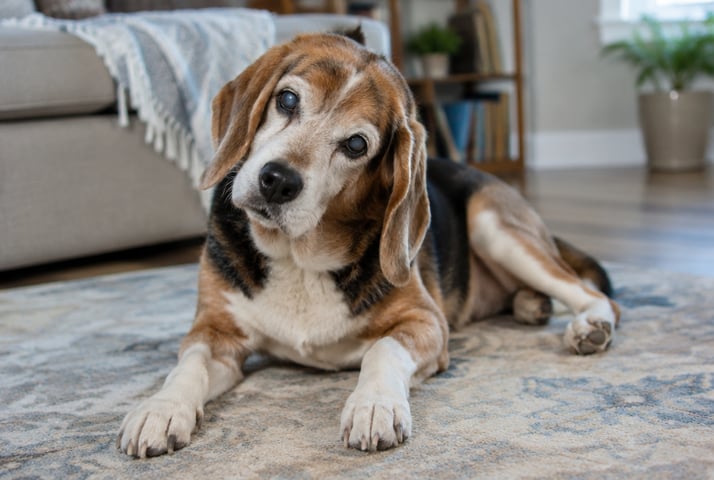
A head tilt is one of the most common signs of vestibular disease in older dogs.
Another major clue is abnormal eye movements. These involuntary eye movements, often called nystagmus, can look like rapid flicking from side to side. Dogs may seem confused or panicked because the room appears to spin.
- Head tilt, which may be mild or severe
- Loss of balance with falling or leaning
- Circling or trouble walking straight
- Eye flicking or other abnormal eye movements
When Is It an Emergency?
Emergency: act now
Sudden loss of balance in an older dog needs a same-day veterinary exam. Go right away if your dog cannot stand, keeps vomiting, or seems very distressed.
Treat sudden loss of balance as an urgent veterinary issue. Even though idiopathic cases can improve, the same clinical signs can also be caused by central vestibular disease, severe ear disease, or another serious problem.
A same-day exam is especially important if your dog is vomiting, distressed, unable to stand, or showing severe signs of dysfunction. Some dogs need intensive care, IV fluids, or help with nausea until they can eat and walk on their own.
- Go right away if your dog cannot stand, keeps vomiting, or seems very distressed.
- Seek urgent care if signs are worsening instead of stabilizing.
- Ask about hospitalization if your dog cannot safely eat, drink, or walk.
Do Old Dogs Recover From Vestibular Disease?
Yes, many old dogs do recover from vestibular disease, especially idiopathic cases. In those dogs, signs are often worst in the first 24 to 48 hours, then begin to ease within about 72 hours with supportive care and time.
Most return to normal activities within two to three weeks, and many reach full recovery. Some dogs, though, are left with a slight head tilt or mild unsteadiness. If your dog is not improving, your veterinarian may look harder for an underlying cause and adjust the treatment plan.
"The first days of vestibular disease often look far worse than the final outcome. Give your dog, and yourself, time before making any decision."
Treatment and Recovery Timeline
Treatment depends on the underlying cause. Idiopathic vestibular disease often needs supportive treatment, such as anti-nausea medication, nursing care, and a safe place to rest. If there is an ear infection, antibiotics or antifungal medication may be used. Corticosteroids were used in the past but are generally not recommended.
The recovery timeline is often encouraging in idiopathic cases. Many dogs show neurologic improvement within 72 hours. Head tilt and stumbling often get better over 7 to 10 days, with fuller recovery in two to three weeks.
| Time after episode | What may happen |
|---|---|
| First 24-48 hours | Signs often look most severe |
| By 72 hours | Many dogs start improving |
| 7-10 days | Balance and posture often improve further |
| 2-3 weeks | Many dogs reach near full or full recovery |
How to Care for Your Dog at Home During Recovery
Home care can make a real difference because it keeps your dog safe while the brain and inner ear recover. The first step is to confine your dog to a small, comfortable space with soft bedding and non-slip flooring. This helps prevent falls and lowers stress.
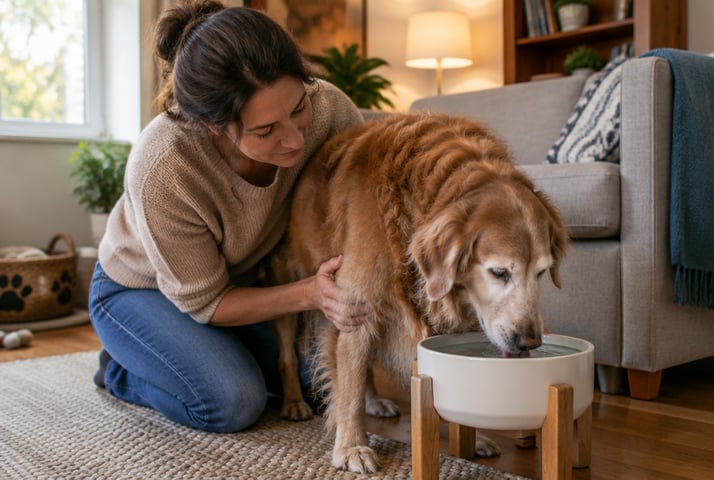
Steady support, non-slip flooring and a raised bowl make recovery easier at home.
Proper care also means helping with basic needs. Some dogs need hand-feeding, bowls placed close to the bed, or support when going outside. A towel or sling under the belly can help a larger dog keep a more normal posture while walking. Honor Pet's guide on how to support and comfort senior dogs with mobility loss has more practical ideas.
- Keep food and water within easy reach.
- Avoid stairs and slippery floors.
- Help with bathroom trips, eating, drinking, and cleanup if needed.
Tip
Lay yoga mats or rugs over slippery floors and block off stairs for the first couple of weeks. Small changes like these prevent falls while your dog relearns their balance.
When Is It Time to Consider Saying Goodbye?
Vestibular disease alone does not always mean euthanasia. Many dogs recover well, so the first step is usually treatment, supportive care, and close reassessment over the next few days. Still, decision making can become harder when the signs of vestibular dysfunction are severe or persistent.
It may be time to consider saying goodbye when your dog is suffering, cannot function comfortably, or has a serious underlying cause that is not likely to improve. In those moments, quality of life should guide every conversation.
Signs Your Dog Is Not Recovering
One of the clearest warning signs is lack of neurologic improvement. If your dog is not better after the first few days, or is getting worse, your veterinarian may suspect a different underlying cause instead of simple idiopathic vestibular disease.
Some dogs are left with a lasting head tilt or slight unsteadiness and still do well. That alone does not mean the outlook is poor. The bigger concern is continued distress, inability to eat or drink, repeated falls, or findings that suggest central vestibular disease, tumor, or severe infection.
- No improvement after several days
- Worsening balance, appetite, or comfort
- Test results pointing to a serious underlying cause
Quality-of-Life Questions to Ask Yourself
When you are facing decision making, ask simple questions. Can your dog rest comfortably? Can they eat and drink with proper care? Are they showing interest in family, or are they frightened and distressed most of the time? These answers help you judge quality of life more clearly. Honor Pet's quality-of-life checklist for pets near end of life can help you track this day by day.
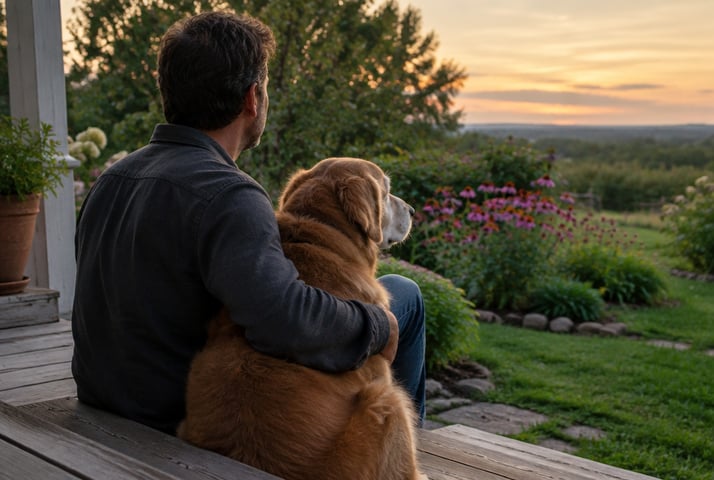
Quiet time together can help you notice how your dog is really doing.
It also helps to think about whether your dog can return to any normal activities that matter to them. Recovery does not have to be perfect, but comfort and dignity do matter. If your dog cannot regain either, talk openly with your veterinarian about next steps.
| Question | Encouraging sign | Concerning sign |
|---|---|---|
| Is my dog comfortable most of the day? | Resting calmly | Distressed or panicked |
| Can I meet their needs safely at home? | Eating and drinking with help | Cannot eat, drink or toilet safely |
| Is there a realistic chance of improvement? | Improving day by day | No change or getting worse |
Questions to Ask Your Veterinarian
Go into the appointment ready to ask direct questions. What diagnostic tests are needed right now? Does my dog seem more likely to have peripheral disease or central disease? Is there a specific cause you suspect, such as ear infections, medication reaction, trauma, or a brain problem? Do we need blood and urine testing, blood pressure measurement, an ear exam, imaging like CT scan or MRI, spinal fluid analysis, or referral to a veterinary neurologist?
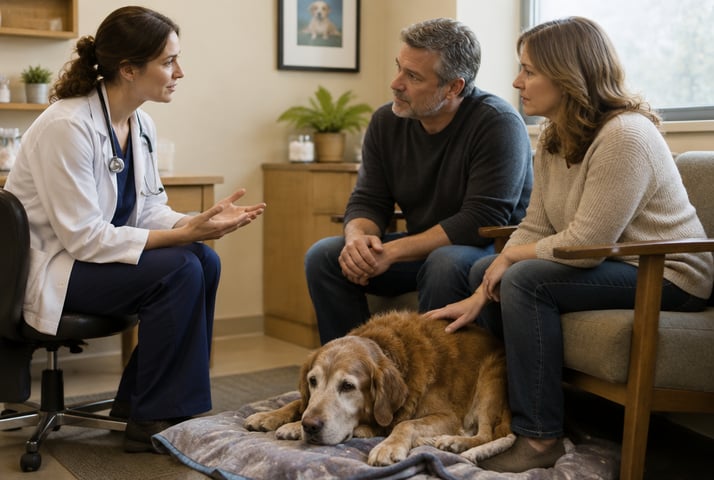
Bring your questions to the vet so you can make a clear, calm decision.
Then ask about treatment options and expectations. What supportive treatment can help today? Should my dog stay in the hospital for intensive care, or can I manage home care safely? What signs would mean the underlying cause is more serious? When should I expect improvement, and when would you want to recheck if recovery does not follow the usual timeline? The American Veterinary Medical Association also encourages pet owners to talk openly with their veterinarian about end-of-life options, so you can plan in a way that feels right.
What Happens During a Peaceful Euthanasia?
If treatment will not restore comfort, peaceful euthanasia can be a gentle end-of-life option. For many families, this choice comes after careful decision making with their veterinarian, especially when severe signs continue, the underlying cause is serious, or intensive care would only prolong distress. The goal is not to rush the choice. The goal is to prevent suffering.
A peaceful euthanasia visit is centered on comfort, calm, and kindness. Your veterinary team explains each step so you know what to expect and can stay focused on your dog. Many families take comfort in creating a quiet setting, saying goodbye without panic, and choosing a final experience that protects their pet's dignity. Read more in Can I be with my dog during euthanasia? and how to prepare for in-home pet euthanasia.
For a dog who struggles to stand or travel, staying home can make the goodbye much gentler. Honor Pet offers gentle euthanasia at home or in our Comfort Center in Los Angeles and Orange County, with all the time and space your family needs.
Planning Ahead, Grief Support and Final Thoughts
Planning ahead can ease some of the fear when an old dog suddenly develops vestibular disease. Ask your veterinarian what signs to watch for, what home setup will help most, and when to call back. If recovery does not happen, it also helps to talk early about end-of-life wishes. Honor Pet's pre-planning and quality-of-life consultations let you talk through options with a veterinarian who specializes in end-of-life care, including aftercare choices such as eco-conscious water cremation.
Many pet owners see strong improvement within days, but when comfort, safety, and dignity are gone, choosing a peaceful goodbye can be a deeply loving decision. You may also find comfort in why it's okay to say goodbye on a good day, and pet loss support is available before and after your dog's passing.
Frequently Asked Questions
How Long Does Vestibular Disease Last in Old Dogs?
In an old dog with idiopathic vestibular disease, clinical signs are often worst during the first 24 to 48 hours. Many start improving within 72 hours. The usual recovery timeline is about one to three weeks, though a mild head tilt or slight unsteadiness may remain in some dogs.
Is Vestibular Disease Painful for Dogs?
Vestibular disease is not mainly known as a pain condition, but the symptoms of vestibular disease can be very distressing. Dogs may feel nauseated, confused, and unstable, much like motion sickness. Supportive care helps pet owners keep dogs comfortable while the episode improves or while the cause is being treated.
Can Vestibular Disease Come Back?
Yes, vestibular disease can come back, depending on the underlying cause. Some idiopathic cases in an old dog may happen more than once over a lifetime. If episodes return, your veterinarian may recommend more testing to look for ear disease, medication effects, or another specific cause.
Should I Put My Dog Down for Vestibular Disease?
Not usually based on vestibular disease alone, because many dogs improve with supportive treatment. Euthanasia becomes part of decision making when quality of life is poor, severe signs of dysfunction continue, or testing shows a serious condition that is not expected to improve and is causing ongoing suffering.
How Can I Help My Dog Eat and Drink With Vestibular Disease?
Supportive care and home care matter a lot. Keep bowls close to your old dog's bed, hand-feed if needed, and support them so they can maintain a safer, more normal posture. Because loss of balance makes simple tasks hard, short, calm feeding sessions are often easier than large meals.
Can Old Dogs Live a Normal Life After Vestibular Disease?
Yes, many can. After vestibular disease, an old dog often returns to normal activities within a couple of weeks, and many make a full recovery. Even when a slight head tilt remains, dogs often adapt well and still enjoy a good quality of life if there is no serious underlying cause.
Talk to Honor Pet
If your dog is not recovering and you are unsure what comes next, Honor Pet's veterinarians are here to talk it through with compassion and without pressure. Call or text our care team at (323) 210-4565, or schedule a euthanasia appointment at home or in our Comfort Center.
Keep them close
When the time comes, many families find comfort in keeping a piece of their dog close. The Honor Pet store offers urns, cremation jewelry designed to hold a small portion of your pet's ashes, and keepsakes like paw prints, photo frames and fur clippings, each personalized by hand.