
Introduction
The most common signs your cat is dying are eating and drinking much less, weight and muscle loss, deep weakness, hiding or withdrawing, poor grooming, and changes in breathing. In the final hours or days, a cat may stop moving, feel cool to the touch and lose bladder control. Many of these signs can also come from a treatable illness or hidden pain, so a call to your veterinarian is always the right first step.
Key Takeaways
- Common signs of a dying cat include loss of appetite, weight loss, weakness, hiding and breathing changes.
- End-of-life changes usually involve both physical symptoms and behavior changes, and they tend to come in clusters.
- Some of the same warning signs can mean a treatable illness, so prompt veterinary care matters.
- Cats are good at hiding pain. A change in behavior is the most common sign, along with changes in posture and facial expression.
- Quality-of-life tracking helps you judge comfort, daily function and whether good days still outnumber bad ones.
- When comfort can no longer be maintained, a planned, peaceful goodbye can spare your cat a difficult final stage.
Facing the end of a beloved cat's life is one of the hardest things a cat owner goes through. You want clear answers, but you also want comfort and honest guidance. This guide explains the most common end-of-life signs in cats in plain English, including physical changes, behavior changes, hidden pain and quality of life. Just as important, it explains when to call your veterinarian right away and how to support your cat with compassion.
When Should You Call Your Veterinarian Right Away?
Call your veterinarian right away if your cat suddenly stops eating or drinking, has trouble breathing, cannot stand, seems confused, cries out, or is severely weak. These can be signs that your cat is in pain or nearing the end, but they can also point to an illness that can still be treated.
Call your vet or an emergency clinic now if your cat has:
- Labored, open-mouth or noisy breathing
- Refused all food, or stopped drinking
- Collapsed or cannot stand or walk
- Vomiting or diarrhea lasting more than 24 hours
- Severe pain, crying out or extreme restlessness
If your elderly cat seems off, the key question is not just "Is this the end?" but "Could this still be helped?" A veterinarian can tell the difference between decline from old age, a chronic illness and a condition that may improve. Cats Protection notes that any change in your cat's routine or behavior can be a sign that their health or quality of life is slipping, and that for a terminal but slowly progressing condition it helps to talk about end-of-life decisions with your vet sooner rather than later.
What Are the Stages of Dying in Cats?
There is no fixed timeline, but most cats move through three broad phases: early, middle and final. A dying cat usually starts with subtle changes in appetite, sleep, energy and social behavior. These first signs are easy to miss, especially in senior cats or cats with a chronic illness such as kidney disease.
As the end gets closer, weakness increases and normal habits fade. In the final days, the body's systems begin to shut down more clearly. Knowing these stages helps you prepare, notice warning signs sooner and ask for help before your cat reaches the final hours.
| Stage | What you may notice |
|---|---|
| Early | Eating less, sleeping more, grooming less, hiding or seeking more attention |
| Middle | Clear weight and muscle loss, weakness, confusion or yowling, litter box problems |
| Final | Little or no eating or drinking, labored breathing, cool body, unable to stand, little response |
Early-stage signs a cat is dying
Early changes are often quiet. You may notice your cat sleeping more, eating less, grooming less or avoiding normal routines. These signs can look mild, but they matter. They may signal an illness, age-related decline or the beginning of the end of life.
Gradual weight loss and lower energy can appear early too. Some cats become less social and spend more time resting alone. Others seem clingier and want extra contact.
- Eating less or showing loss of appetite
- Sleeping more and playing less
- Hiding more often or becoming withdrawn
- Looking less tidy because grooming has dropped
Because these signs can also fit a treatable problem, do not assume your cat is dying without a veterinary check.
Middle-stage end-of-life changes
By the middle stage, decline is harder to ignore. Your cat may struggle to get around, sleep almost all the time and lose interest in food, toys or family. Behavior changes become clearer, and quality of life often shifts from mixed days to mostly difficult ones.
You might also see confusion, unusual vocalizing, irritability or litter box problems. Vets look at this full picture, not one symptom alone. They assess pain, hydration, hunger, movement, hygiene and whether your cat still has good days.
- Marked weakness or trouble getting up
- Confusion, yowling or seeming lost at home
- More hiding, less interest and accidents outside the litter box
These changes often mark a serious decline and are a good time to have a quality-of-life conversation with your vet.
Final-stage symptoms to watch for
In the final stage, the body is shutting down. Your cat may become unresponsive, too weak to move, or unable to control their bladder and bowels. According to PetMD's vet-reviewed guide, a natural death without euthanasia may involve labored breathing, a low body temperature and immobility, and it can be distressing and prolonged.
- Very low energy or complete immobility
- Shallow, labored or irregular breathing
- Cool ears and paws as body temperature drops
- Sunken eyes and signs of dehydration
- Little or no response to you or their surroundings
If you see these signs, call your veterinarian. Keep your cat in a quiet, warm resting area and focus on comfort, not on encouraging activity.
What Are the Most Common Physical Signs a Cat Is Dying?
The most common physical signs are loss of appetite, dehydration, weight loss, weakness, poor grooming and breathing difficulties. A warning sign becomes more serious when several changes happen together, such as rapid weight loss plus hiding, confusion or trouble moving.
You may also notice sunken eyes, vomiting, diarrhea or a drop in body temperature. Any one of these deserves attention, but a cluster of them often points to serious decline. The sections below cover the physical changes cat owners notice most often.
Appetite loss and refusal of water
Loss of appetite is often one of the first signs that a cat is nearing the end of their life. Some cats eat less and less before stopping altogether. Refusing water is even more urgent, because dehydration worsens weakness and distress.
If your cat is refusing food or water, call your veterinarian. Do not wait several days and hope it passes. Cats can become seriously ill quickly when they stop eating, as we explain in how long a cat can go without eating. Your vet may suggest ways to tempt your cat, supportive care or medication, depending on their condition.
- Offer wet food, gently warmed food or stronger-smelling foods
- Try small, frequent meals and never force-feed
- Keep fresh water close to your cat's resting area
- Ask your vet about appetite support or fluids
Hospice guidance from the American Association of Feline Practitioners (AAFP) and IAAHPC suggests warmed wet food, stronger-smelling foods and onion-free broth, and advises not to force a cat to eat.
Weight loss, weakness and trouble moving
Weight loss can happen slowly with aging, but rapid weight loss is different. It may reflect serious disease, muscle loss or the body's reduced ability to keep up its strength. Even cats who still nibble can lose condition near the end.
As decline progresses, you may see marked weakness, wobbling, weak back legs or trouble standing. That level of decline affects quality of life and daily function in a major way.
| Sign | What you may notice |
|---|---|
| Weight loss | Bones feel sharper, body looks thinner, coat looks loose or unkempt |
| Muscle loss | Hips and spine stand out more, weaker jumping or climbing |
| Trouble moving | Slow to get up, stumbling, avoiding stairs, staying in one spot |
| Severe weakness | Cannot stand well, sleeps through meals, responds less |
If your cat's movement suddenly gets worse, contact your veterinarian right away.
Changes in breathing patterns or heart rate
Breathing changes are among the most concerning physical signs. A cat near death may breathe rapidly, very slowly or irregularly. Shallow breaths, pauses or open-mouth breathing can mean distress or a lack of oxygen. As the body shuts down, your cat may also feel cool, weak and less responsive.
- Labored or open-mouth breathing
- Long pauses between breaths or very shallow breathing
- Noisy or rattling breathing
Any breathing difficulty deserves urgent veterinary care. Do not assume it is simply part of old age.
Which Behavioral Changes Indicate a Cat Might Be Nearing the End?
A dying cat often shows behavior changes before the most dramatic physical signs appear. These shifts can be small but meaningful: hiding, sleeping more, losing interest in people or acting confused in familiar rooms.
Some cats become clingy, while others want to be left alone, and behavior can change from day to day. That is why the people who know their cat best often notice trouble first. Two of the clearest patterns are withdrawal and changes in vocalizing.
Hiding, withdrawing and losing interest
Yes, it is common for a dying cat to hide or seek solitude. Many cats look for a quiet, protected place when they feel weak or unwell. This happens in indoor cats as well as cats that spend time outside.
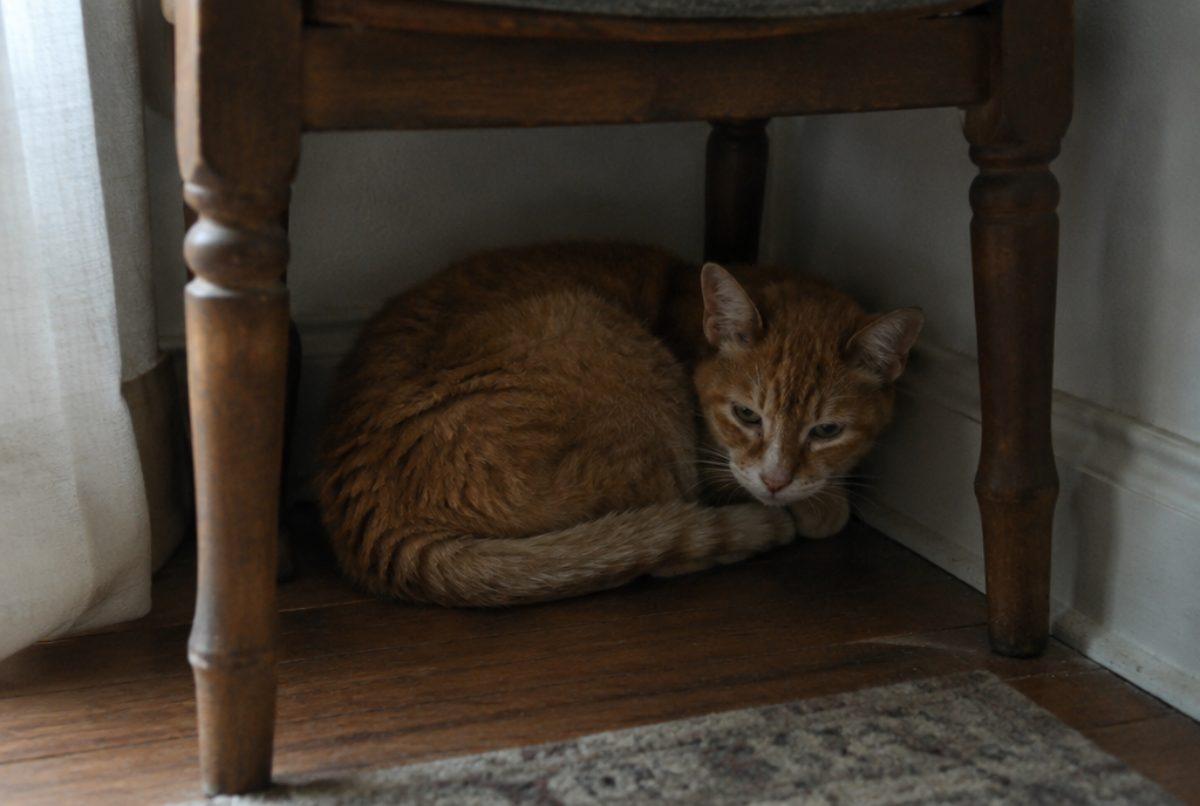
You may also notice withdrawal from play, petting, meals or favorite routines. A cuddly cat may avoid touch. Another may stop greeting you at the door. This loss of interest is part of how a cat's behavior changes as energy fades.
- Hiding under beds, in closets or behind furniture
- Avoiding play, meals or social contact
- Spending almost all day in one resting spot
Still, hiding is not a diagnosis on its own. The AAFP lists hiding as a common sign of pain, and it can also come from fear or a treatable illness, so call your veterinarian.
Unusual vocalizations and confusion
Some cats become more vocal near the end. You might hear yowling, repeated meowing or sounds that seem out of character. This can reflect confusion, discomfort or distress, especially in older cats.
Confusion may look like staring, wandering, seeming lost at home or going to the wrong place instead of the litter box. In the final stage, some cats also respond less to familiar people and routines.
- Yowling or crying, especially at night
- Seeming lost or disoriented in familiar rooms
- Restlessness, pacing or sudden irritability
If these changes appear along with weakness, appetite loss or breathing problems, they deserve prompt veterinary attention. They can mark serious decline, not just normal aging.
How Can You Tell if Your Cat Is in Pain or Distress?
Cats hide pain well, which makes end-of-life decisions harder. The AAFP's position statement on hospice care for cats puts it simply: "A change in behavior is the most common sign of pain." You may notice withdrawal, tension, poor grooming, restlessness or a change in breathing long before you see obvious distress.
That is why palliative care and hospice care focus so strongly on comfort. A veterinarian can assess whether pain medication, changes at home or a different end-of-life plan is needed.
Subtle signs of discomfort in cats
One brief off day may not mean much. Ongoing signs of discomfort, especially in clusters, suggest a deeper problem and a need for veterinary care. According to the AAFP and IAAHPC, pain can cause a cat to hide; to eat, move or groom less; and to have trouble standing, walking or getting up.
- Squinting or a tense, dull expression
- Sleeping in unusual positions or being unable to settle
- Sensitivity to touch, irritability or new aggression
- Changes in litter box use
- Poor grooming or reluctance to move
When these changes happen with loss of appetite, weakness or breathing difficulties, do not wait. Ask your veterinarian whether comfort can still be improved.
Reading pain in your cat's face and posture
Your cat's face can reveal a lot. Researchers who developed the Feline Grimace Scale (Scientific Reports, 2019) found five facial changes that signal pain. Each is scored 0 (absent), 1 (moderate) or 2 (obvious):
| Facial sign | What it looks like in a cat in pain |
|---|---|
| Ear position | Ears pulled apart and rotated outward |
| Orbital tightening | Eyes narrowed, squinted or tightly closed |
| Muzzle tension | Muzzle flattened and stretched from round to oval |
| Whiskers | Whiskers pushed forward, away from the face |
| Head position | Head held below the shoulders or tilted down |
Posture matters too. A painful cat may stay hunched, still and guarded, and resist shifting position. As decline advances, muscle loss can make the body look sharper and more fragile, and the ears, paws or nose may feel cool. If you notice several of these signs, share what you see with your veterinarian. Notes, photos or short videos taken at home can help you describe the changes.
How Do Veterinarians Assess Quality of Life for Senior Cats?
Veterinarians often use a quality-of-life approach to guide end-of-life decisions for senior cats. Instead of focusing on one symptom, they look at comfort, eating, drinking, hygiene, movement and whether your cat still enjoys daily life.
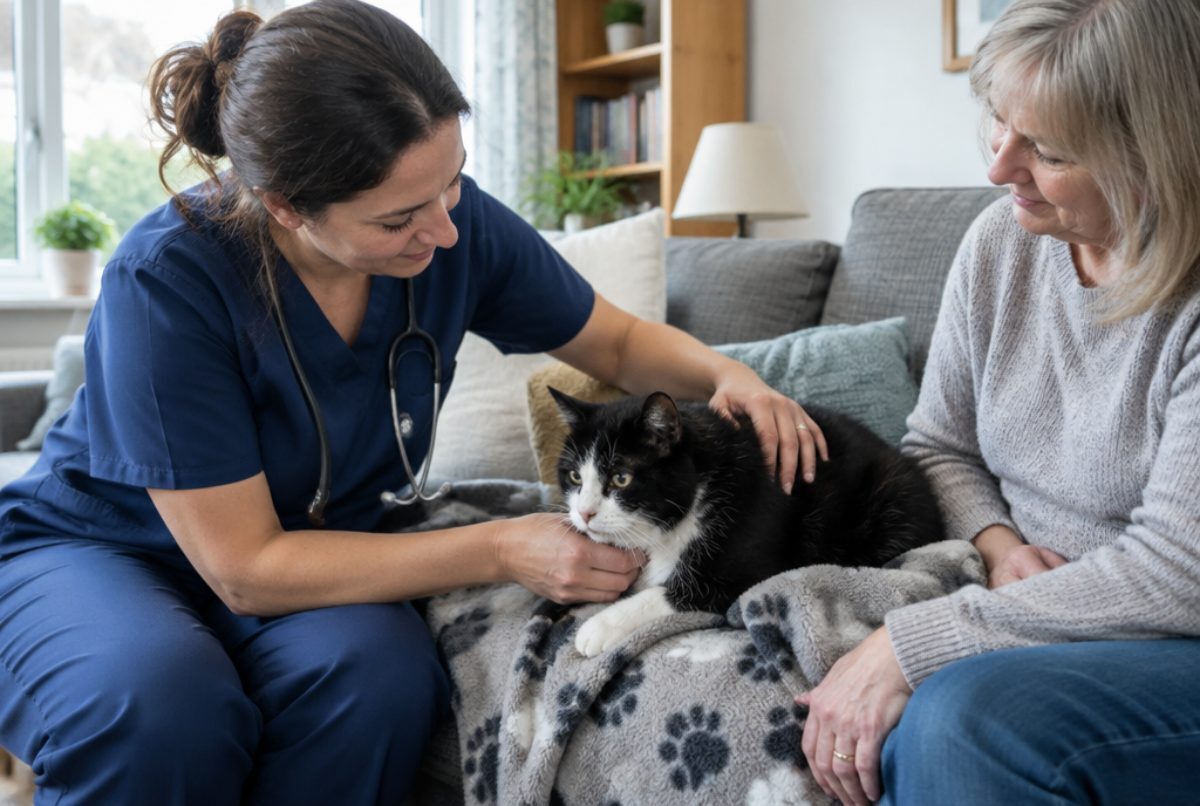
This gives structure to a very emotional time. With your veterinarian, you can step back and ask practical questions: Is pain controlled? Is my cat still able to rest, eat and connect? One of the best-known frameworks is the HHHHHMM scale, explained next.
Overview of Quality of Life scales for cats
Quality-of-life scales help vets and families assess a cat's wellbeing consistently. The HHHHHMM (or 5H2M) scale, described in the AAFP's hospice position statement, scores seven areas from 0 to 10. A total above 35 is considered an acceptable quality of life.
| Area | Question to ask |
|---|---|
| Hurt | Is pain controlled and is breathing comfortable? |
| Hunger | Is your cat eating enough, even with hand-feeding? |
| Hydration | Is your cat drinking enough or becoming dehydrated? |
| Hygiene | Can your cat stay clean and use the litter box? |
| Happiness | Does your cat still enjoy attention or their surroundings? |
| Mobility | Can your cat move enough to rest, eat and use the litter box? |
| More good days than bad | Are bad days now outnumbering good days? |
A single hard day matters less than a clear downward trend. Keeping a simple daily diary, marking each day as good or bad with a note about eating, comfort and mood, can make the pattern easier to see.
A good day for a senior cat is one with little pain, some interest in food and family, and a comfortable place to rest.
Deciding when intervention or euthanasia may be needed
You should consider euthanasia when your cat's suffering cannot be relieved, good days are rare and basic comfort is slipping away. That may mean uncontrolled pain, severe breathing trouble, being unable to eat or drink, or mobility so poor that your cat can no longer rest, eat or use the litter box. The AAFP notes that "when bad days outnumber good days, quality of life for the dying cat might be too compromised."
These are difficult decisions, and you do not have to make them by instinct alone. The Cornell Feline Health Center suggests asking your vet directly, "Can you tell me if my cat is suffering?" and asking yourself what your cat's quality of life is now.
- Pain is not well managed
- Your cat no longer enjoys food, rest or contact
- Bad days clearly outnumber good days
If you are unsure, Honor Pet offers one-hour quality of life consultations with a licensed veterinarian, virtually or in person, to help you weigh where your cat is and what comes next. For more on choosing between comfort care and euthanasia, see our guide to pet hospice care vs natural death.
What Should You Do to Comfort and Support a Dying Cat?
Start by making comfort the goal. Palliative care and hospice care aim to reduce pain, lower stress, support eating and drinking when possible, and help your cat rest peacefully. Keep food, water and the litter box close. Let your cat choose closeness or quiet. Some cats want touch, others want space, and both are normal at the end of life.
Support yourself too. This is an emotional time, and many families benefit from talking with a trusted friend, their veterinarian or a pet loss support group. Planning ahead often eases fear and helps you stay present with your cat instead of reacting in crisis.
Creating a calm, comfortable space at home
A calm home setup can make a real difference. Choose a quiet resting area away from noise, stairs and household traffic. Soft bedding, warmth and easy access to the basics help your cat save energy and feel safe. If your cat likes the sun, let them rest in a warm patch of light without overheating.
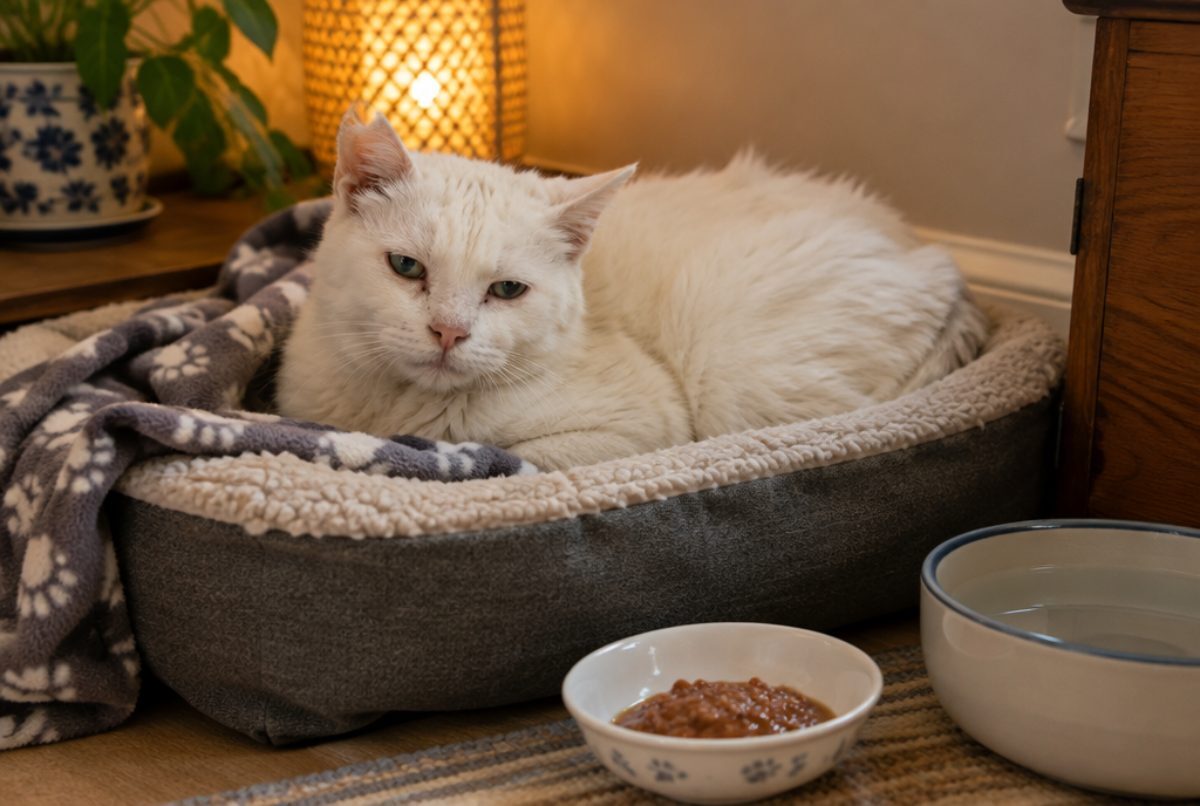
- Use a low-entry litter box near the bed
- Keep water and food within a few steps
- Add warm, clean bedding and gently wipe your cat if they cannot groom
- Keep routines as normal as possible
Tip
Make sure everyone in the household knows the plan: where your cat rests, how they are being fed and given medication, and who to call if breathing or comfort suddenly changes.
How Can You Plan a Peaceful Goodbye for Your Cat?
Planning a goodbye does not make it happen sooner. It gives you more control and calm, and more space to focus on your cat. Think about where your cat would feel safest, who should be present and what aftercare you want. Some families also gather photos or keepsakes so the final moments feel intentional, not rushed. Our guide on how to prepare for in-home pet euthanasia walks through the practical steps.
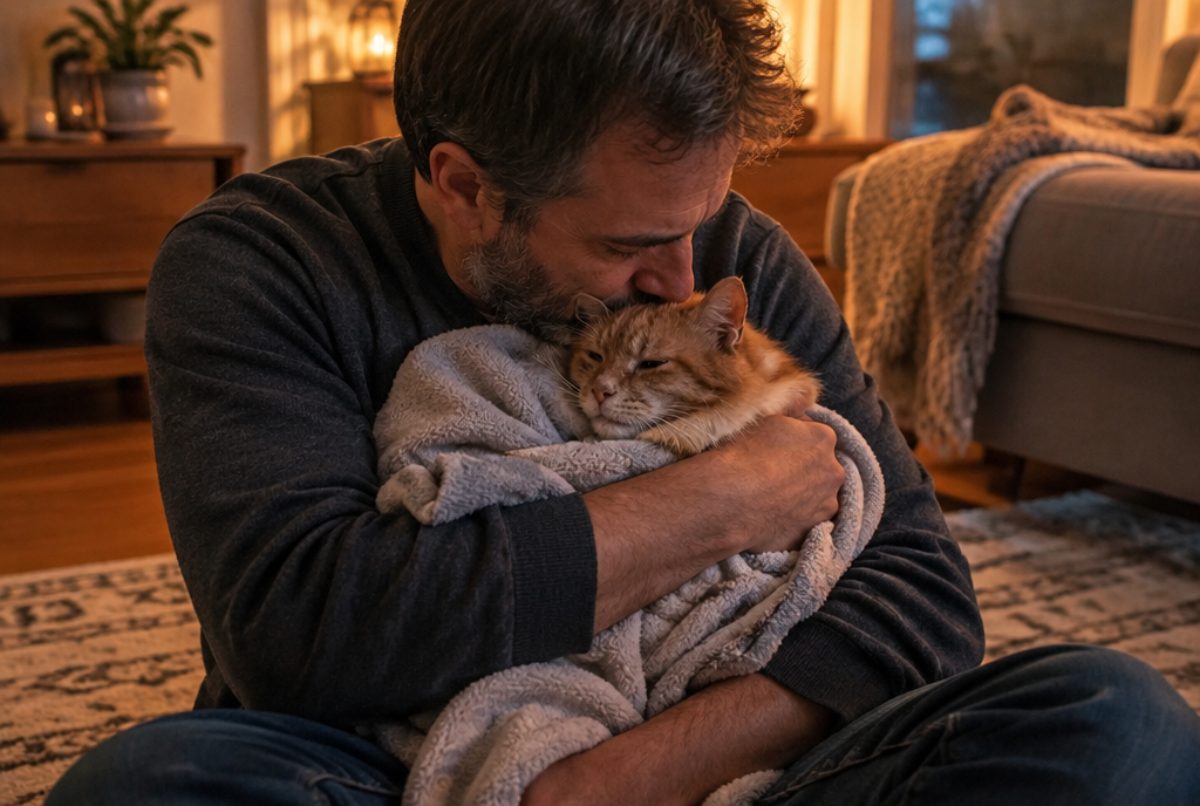
Some cats find car trips and clinic visits stressful, so many families prefer a goodbye at home. Honor Pet offers in-home euthanasia and euthanasia at our Comfort Center in downtown Los Angeles, with appointments 7 days a week and same-day visits often available. A calming sedative helps your cat relax and fall asleep first. Only once your cat is fully relaxed is a second medication given, so you can hold your cat, talk to them or simply sit quietly together.
It helps to know what you may see. Cats Protection explains that a twitch or a deep breath afterward is not a sign of pain, and the AAFP notes that a cat's eyes do not automatically close once they have passed. Afterward, gentle water cremation is available, and with individual cremation your cat's ashes come home with you.
Grief can begin long before a goodbye, and you do not have to carry it alone. Honor Pet's pet loss support is led by a licensed clinical social worker and includes free weekly support groups and one-on-one sessions.
Seeing signs your cat is dying?
Our veterinarians can help you understand your cat's quality of life and plan a gentle goodbye when the time comes, at home or at our Comfort Center.
Talk to Honor Pet or call (323) 515-1234
To keep a lasting memory of your cat, a clay paw print or a whisker clipping preserves a small, touchable part of them. The Honor Pet store also offers urns from $25 to $295, and our guide to cat urns for ashes can help you choose.
Frequently Asked Questions
How long does it take for a cat to die naturally?
There is no set timeline. Once a cat reaches the end of life from old age or serious illness, the final stage can last hours, days or longer, and decline is often uneven. A natural death can involve labored breathing, a low body temperature and being unable to move, so ask your veterinarian how to keep your cat comfortable and when euthanasia might be kinder.
Do cats know when they are dying?
No one can say for certain whether a cat understands death. What we do know is that cats' behavior often changes near the end. Many cats seem to sense that their body feels different and respond by withdrawing, hiding, becoming confused or seeking more closeness.
Why do cats hide when they are dying?
Hiding is a common response when a cat feels weak, unwell or in pain, because a quiet, protected spot feels safer. It happens in indoor cats too. Hiding can be part of serious decline, but it is also a common sign of pain or a treatable illness, so it is worth a call to your vet.
Should I let my cat die naturally at home or choose euthanasia?
That depends on your cat's comfort, quality of life and medical condition. The AAFP says a natural death at home is acceptable if it comes peacefully and painlessly, but when palliative care can no longer keep your cat comfortable, euthanasia may be the kindest choice. Your veterinarian can help you weigh both options before a crisis.
What are the signs a cat is dying of old age?
Common end-of-life signs in senior cats include loss of appetite, weight loss, weakness, more sleep, hiding, confusion, poor grooming and breathing changes. Old age is not always the cause, so if you see rapid weight loss or a sudden decline, ask your veterinarian to check your cat. Our guide to how long cats live explains when a cat becomes a senior.
How much does in-home cat euthanasia cost in Los Angeles?
At Honor Pet, in-home euthanasia is $550, and euthanasia at our Comfort Center in downtown Los Angeles is $300. For a cat under 20 lb, water cremation is $180 for communal cremation or $349 for individual cremation, with your cat's ashes returned to you.