
Introduction
Addison's disease in dogs (hypoadrenocorticism) happens when the adrenal glands stop making enough cortisol and aldosterone, the hormones that control stress response, hydration and the balance of sodium and potassium. Signs are often vague and come and go, but with a correct diagnosis and lifelong hormone replacement, most dogs go on to live full, happy lives.
Key Takeaways
- Addison's disease means the adrenal glands do not make enough cortisol and aldosterone.
- It is most often seen in young to middle-aged dogs, and females are affected more often.
- Early signs such as lethargy, poor appetite, vomiting and diarrhea can wax and wane, which is why it is called "the great pretender."
- An Addisonian crisis (sudden weakness, collapse, severe vomiting) is a medical emergency.
- An ACTH stimulation test confirms the diagnosis.
- Lifelong treatment with prednisone plus DOCP injections or daily fludrocortisone usually gives a good long-term outlook.
If you are a pet parent worried about Addison's disease in dogs, the good news is that this condition is manageable in many cases once it is identified. The hard part is that the clinical signs are often vague, can come and go, and may look like many other illnesses. Understanding what it is, what to watch for, and when to act fast can help you protect your dog.
What Is Addison's Disease in Dogs?
Addison's disease, also called hypoadrenocorticism, is an uncommon disease in which the adrenal glands do not make enough essential hormones. These hormones include cortisol and aldosterone, which help regulate blood pressure, hydration, metabolism, electrolytes, and the body's response to stress. A simple way to picture it: the adrenal glands are like your dog's batteries, and with Addison's those batteries keep running low.
Because low hormone levels affect many body systems, the signs of Addison's are often vague. Addison's disease in dogs can become life-threatening if the deficiency is severe. In some dogs, the condition stays subtle for a while. In others, it turns into a sudden collapse that needs emergency care.
What Causes Addison's Disease, and Which Dogs Are at Risk?
In most dogs, Addison's disease happens when the adrenal glands are damaged and cannot maintain normal hormone levels. According to the Merck Veterinary Manual, the most common cause is suspected to be immune mediated, meaning the body attacks its own adrenal tissue. Less common causes include cancer spreading to the adrenal glands, bleeding into the glands, and certain medicines, including drugs used to treat Cushing's disease in dogs. There is also a rare secondary form linked to low ACTH from the pituitary gland.
The disease usually starts in young to middle-aged dogs, and females are affected more often. Any breed can develop it, and mixed-breed dogs are diagnosed most often, but the Animal Medical Center lists these breeds as more prone:
| Breed group | Breeds at higher risk |
|---|---|
| Poodles and water dogs | Standard Poodles, Portuguese Water Dogs, Nova Scotia Duck Tolling Retrievers |
| Terriers | West Highland White Terriers, Cairn Terriers, Soft Coated Wheaten Terriers |
| Others | Great Danes, Bearded Collies, Cocker Spaniels |
What Are the Symptoms of Addison's Disease in Dogs?
The symptoms of Addison's disease can be easy to miss at first. Many dogs show vague signs that wax and wane, which is one reason the disease is mistaken for other problems and is often called "the great pretender." Common signs include:
- Lethargy and weakness
- Loss of appetite and weight loss
- Vomiting and diarrhea
- Increased thirst and urination, including accidents in the house
- Shaking or trembling
- Dehydration
These signs may come and go for days, weeks or even months before a diagnosis is made. Sometimes the change is more dramatic: a dog may have sudden weakness, severe vomiting, or collapse after seeming only mildly unwell before. If your dog just does not seem quite right, and the pattern keeps returning, that is a good reason to check in with your veterinarian.
How Do You Recognize an Addisonian Crisis?
An Addisonian crisis is a medical emergency. It may show up as sudden weakness, severe vomiting, diarrhea, collapse, or shock. Some dogs develop dangerous electrolyte imbalances, especially a high potassium level (hyperkalemia), which can slow the heart or cause an abnormal rhythm. Left untreated, a crisis can be fatal.
| Emergency sign | What it can mean |
|---|---|
| Sudden weakness or collapse | Poor circulation, shock, or severe hormone deficiency |
| Severe vomiting or diarrhea (sometimes with blood) | Rapid fluid loss and worsening dehydration |
| Unusually slow heart rate | Possible effect of very high potassium |
| Severe dehydration | A major fluid deficit that needs IV fluids |
| Trembling, extreme lethargy or unresponsiveness | An advanced crisis affecting multiple body systems |
Get help right away
If your dog collapses, is very weak, or has severe vomiting or diarrhea, go to your veterinarian or an emergency clinic immediately. Bring a list of current medicines, especially if your dog already takes steroids or has been treated for Cushing's disease.
At the hospital, vets usually start IV fluids right away. They monitor blood pressure and electrolytes, correct low blood sugar if present, and give injectable steroids. If high potassium is affecting the heart, medicines such as calcium gluconate may be used to protect the heart while other treatments work.
How Is Addison's Disease Diagnosed and Treated?
Diagnosis usually starts with routine blood and urine tests. These may show low sodium and high potassium, and a sodium-to-potassium ratio below 27 raises suspicion, although it does not prove the disease on its own. Confirmation comes from an ACTH stimulation test, which measures cortisol before and after an injection of synthetic ACTH. If cortisol stays very low after stimulation (below 2 mcg/dL), Addison's disease is confirmed. Your vet may also recommend an ECG, X-rays or an abdominal ultrasound to rule out other problems.
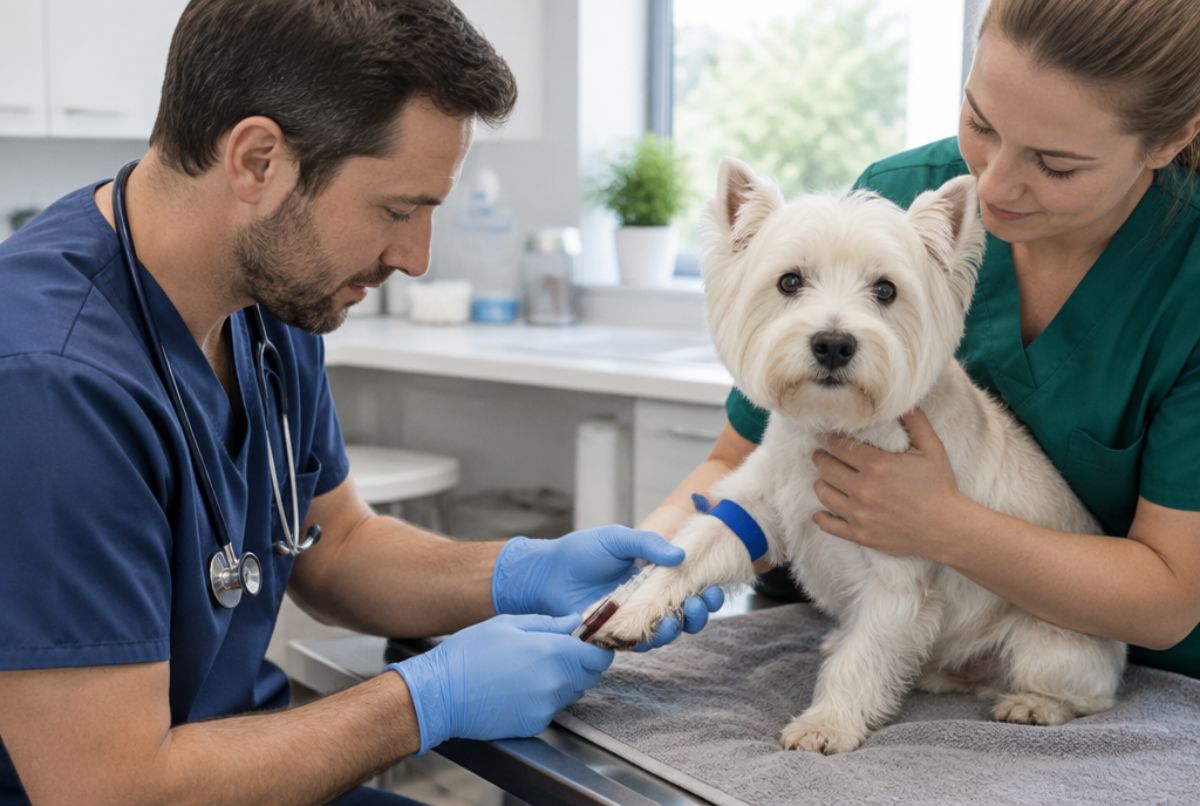
Treatment depends on whether your dog is stable or in crisis. Long term, Addison's disease is managed with hormone replacement for life:
- Glucocorticoid replacement, usually a low daily dose of prednisone, replaces cortisol.
- Mineralocorticoid replacement replaces aldosterone, either with desoxycorticosterone pivalate (DOCP), an injection usually given about once a month, or with fludrocortisone, a daily tablet. Fludrocortisone also has some glucocorticoid activity.
Your vet will recheck sodium and potassium until the right doses are found, then less often. The goal is to keep your dog comfortable on the lowest effective dose. You can read more in Merck's overview of Addison's disease.
Living With Addison's Disease and Knowing When It's Time
Once treatment is started and your dog is stable, the outlook is encouraging. With lifelong treatment and regular monitoring, the long-term prognosis for dogs with Addison's disease is good, and many live normal lives. That usually means follow-up exams, repeat bloodwork to check electrolytes, and medication adjustments over time.
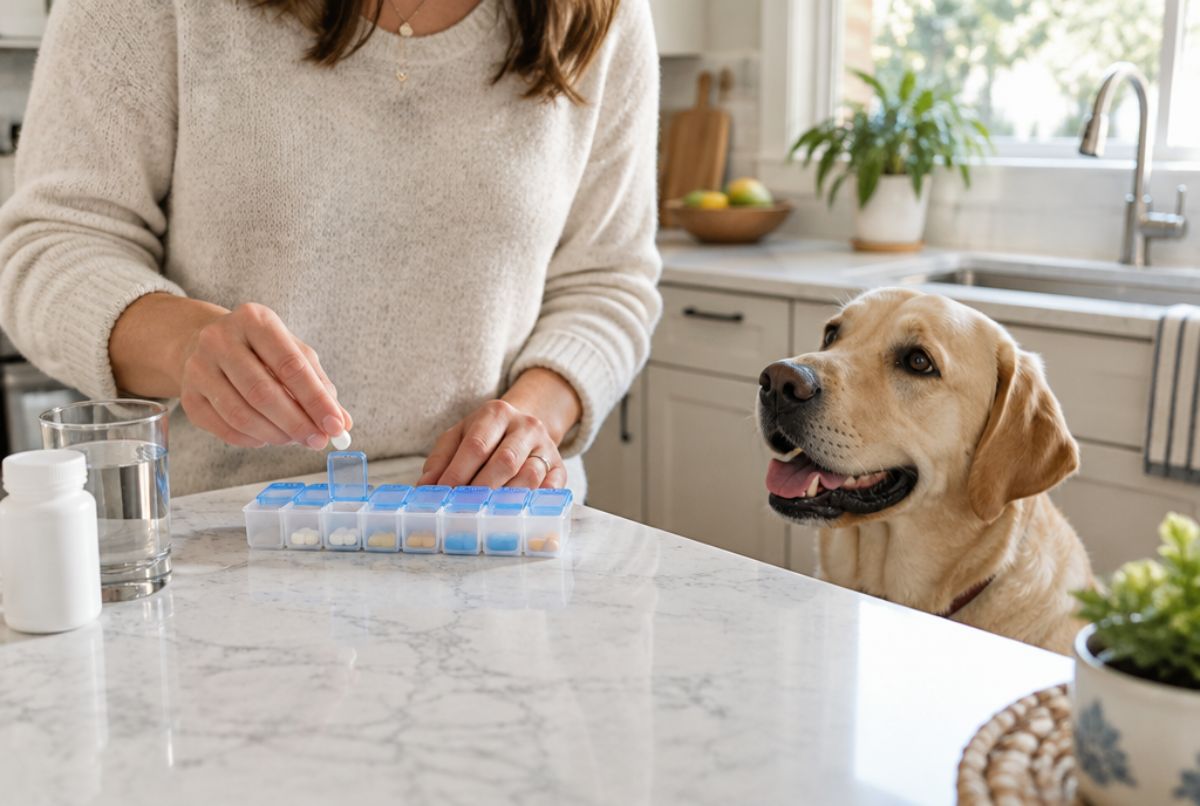
Daily habits make a big difference:
- Keep a medication routine. Give doses at the same time each day, and use reminders or a pill organizer. Never stop or change medicines on your own.
- Plan for stress. Illness, travel, boarding, fireworks and other stressful events raise the body's need for cortisol. Ask your vet whether your dog needs a higher steroid dose at those times. A pet sitter at home can be less stressful than boarding.
- Have an emergency plan. Ask your vet which warning signs mean "go now," and keep the number of your nearest emergency clinic handy.
- Watch for returning signs. Weakness, appetite changes, vomiting, diarrhea, increased thirst or low energy can mean treatment needs review.
With the right care, many dogs with Addison's disease live happy, fulfilling lives.
Still, there may come a time when managing Addison's becomes harder. Your dog may stop responding well to treatment, have repeated crises, or develop another serious illness that affects quality of life. If you reach that crossroads, it is okay to have an open, honest conversation with your family and your veterinarian about comfort and next steps. Our quality-of-life checklist and our guide to knowing when it's time to say goodbye can help you think it through.
When the time comes, Honor Pet offers in-home euthanasia throughout Los Angeles and surrounding areas, as well as euthanasia at our Comfort Center, a calm space with private, home-like rooms. A calming sedative is given first so your dog feels at ease, and appointments are available seven days a week. Our pre-planning team can talk you through options ahead of time, including gentle water cremation, and our pet loss support resources are here for the days that follow.
Facing hard choices about your dog's health?
Our veterinarians can help you weigh the next step with care, at home or at our Comfort Center.
Talk to Honor Pet or call (323) 515-1234
If you would like a lasting keepsake, a clay paw print can be taken with care during aftercare, and the Honor Pet store also offers ink paw and nose prints, urns from $25 to $295 and cremation jewelry that can hold a small amount of ashes or fur.
Frequently Asked Questions
What Is the Life Expectancy of a Dog With Addison's Disease?
Many dogs with Addison's disease live normal lives once they are diagnosed, treated and kept stable. The disease needs lifelong treatment, but with regular monitoring and medication, the long-term outlook is good.
Can Stress Trigger an Addisonian Crisis in Dogs?
Yes. In times of stress, the body needs more cortisol than usual. A dog with Addison's cannot make enough on its own, so illness, travel or other stress can tip it into a crisis. Your vet may advise a higher steroid dose during stressful events.
What Long-Term Care Do Dogs With Addison's Disease Need?
Long-term care centers on hormone replacement: a glucocorticoid such as prednisone plus DOCP injections or daily fludrocortisone. Dogs need lifelong treatment, regular electrolyte checks and dose adjustments over time, with the goal of keeping them comfortable on the lowest effective dose.
Is Addison's Disease in Dogs Hereditary?
Genetics seem to play a role, because some breeds, such as Standard Poodles, Portuguese Water Dogs and Nova Scotia Duck Tolling Retrievers, are affected more often. Any dog can develop it, though, including mixed breeds.
What Is Atypical Addison's Disease in Dogs?
Atypical Addison's disease is a form in which the adrenal glands do not make enough cortisol, but aldosterone is still normal. Because sodium and potassium stay normal, it can be harder to spot. Some dogs later develop the typical form, so their electrolytes are checked over time.
Can Addison's Disease in Dogs Be Cured?
No. Addison's disease cannot be cured, but it can be controlled well. With lifelong hormone replacement and ongoing care, many dogs stay stable and enjoy a good quality of life for years.