
Introduction
It may be time to stop fighting mast cell tumors in your dog when treatment no longer keeps them comfortable: the tumors keep growing or spreading despite therapy, side effects outweigh the benefits, or bad days start to outnumber good ones. At that point, the focus can shift from controlling the cancer to comfort, and for some families, to a peaceful goodbye.
Key Takeaways
- Mast cell tumors in dogs can act very differently, so prognosis depends on tumor grade, spread, and response to treatment.
- Low-grade tumors often do well with surgical removal, while high-grade tumors usually carry a much poorer prognosis.
- When treatment is no longer helping, the focus can shift from controlling the cancer to quality of life.
- Palliative care can ease stomach upset, itching, swelling and loss of appetite near the end of life.
- Tracking your dog's comfort, appetite and the number of bad days helps guide the decision.
- A peaceful goodbye may include compassionate in-home euthanasia when suffering can no longer be managed.
Hearing that your dog has mast cell tumors can leave you torn between hope and worry. You want to know which treatment options still make sense, when a veterinary oncologist may help, and when continuing treatment may no longer be kind. This guide explains how these tumors behave, what affects prognosis, and how to judge your dog's comfort, so you can make a loving decision with clear facts.
What Are Mast Cell Tumors in Dogs?
Mast cell tumors in dogs are a common type of cancer made of mast cells, which are part of the immune system. These cells normally help with allergic reactions and wound healing. They contain substances such as histamine, so when tumor cells are disturbed, they can trigger redness, swelling, itching, vomiting, or even more serious allergic reactions.
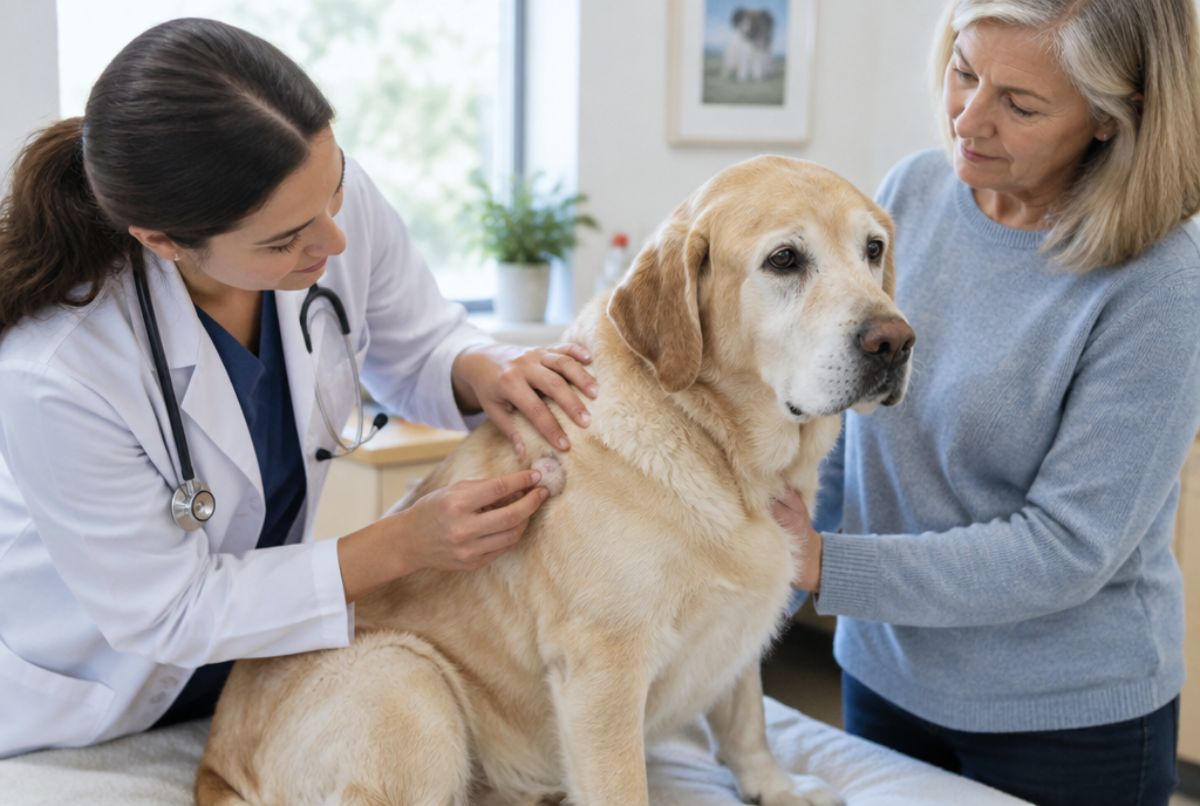
According to the American College of Veterinary Surgeons, mast cell tumors are the most common skin tumor in dogs, making up 14 to 21 percent of all skin tumors diagnosed. Boxers and Boston Terriers account for about half of all cases, and Penn Vet also lists Pugs, Bulldogs and retrievers among the breeds at higher risk.
Most mast cell tumors appear as skin tumors, but they do not always look the same. Some look like small raised bumps. Others are red, ulcerated or swollen. They may stay the same size for a long time, then suddenly change, and their size can even go up and down from day to day as inflammation comes and goes. In some dogs, the disease also affects internal organs such as the liver, spleen, gastrointestinal tract or bone marrow, which usually signals a more aggressive problem.
How Does Tumor Grade Affect Prognosis?
The grade of the tumor is one of the most important clues about prognosis. In simple terms, tumor grade tells your veterinarian how aggressive the cancer cells look under the microscope, and it can only be confirmed with a biopsy. Low-grade tumors are usually less aggressive. High-grade tumors are more likely to regrow, spread and shorten survival time.
Pathologists may use an older three-tier system (grades I, II and III) or a newer two-tier system with just two groups: low grade and high grade. The newer system is often used because pathologists agree on it more consistently. In the study that introduced it, dogs with low-grade tumors survived more than two years after surgery, while dogs with high-grade tumors survived less than four months, as summarized by dvm360.
| Tumor grade | What it often means |
|---|---|
| Low grade | Less aggressive behavior and a better chance that surgical removal is enough. Spread to other sites is uncommon (about 2 to 16 percent). |
| High grade | Greater risk of spread (up to 95 percent), regrowth and a poorer prognosis. Most lead to serious complications within a year. |
| Grade II (older three-tier system) | An in-between group that can be harder to predict and may need closer review and added therapy. |
The spread and complication figures above come from MSPCA-Angell's clinical review. The same review notes that low-grade tumors make up 59 to 81 percent of cases, which is encouraging news for many families.
What Treatment Options Are Available for Mast Cell Tumors?
Treatment options depend on where the tumor is, the grade of the tumor, whether it has spread, and your dog's overall health. A diagnosis often starts with fine needle aspiration, which collects a sample of cells from the lump. Surgical removal with wide margins is the main treatment for most skin tumors. After surgery, the biopsy confirms the type of tumor, whether the margins are clean, and whether the tumor is low grade or high grade.
If cancer cells remain or the tumor is more aggressive, your veterinarian may discuss radiation therapy, chemotherapy or targeted drugs. Toceranib phosphate (Palladia) is a tyrosine kinase inhibitor used for some dogs, especially when there is recurrent disease, spread, or a c-Kit mutation. Supportive drugs are also used to reduce the effects of histamine release and stomach irritation. You can read more about each option in the Penn Vet client guide to mast cell tumors.
When to call your vet right away
When mast cells release their granules, they can cause stomach ulcers and bleeding, swelling, and a dangerous drop in blood pressure. Call your veterinarian or an emergency clinic if your dog vomits blood, passes black or tarry stool, has pale gums, collapses, or a tumor suddenly swells and bleeds.
When Should You Stop Fighting Mast Cell Tumors in Your Dog?
You may stop active treatment when it is no longer helping your dog feel or function better. This often happens at the end of life, when the tumor keeps progressing, side effects are building, or spread to internal organs makes control unlikely. For pet owners, this is a deeply difficult time.
What matters most is your dog's quality of life, not just the treatment plan on paper. High-grade tumors, spread to other organs, and repeated decline after therapy can all show when the focus should shift from fighting disease to comfort and peace. Our guide to knowing when it's time to say goodbye covers this decision in more depth.
Stopping treatment is not giving up. It is choosing comfort when the cancer can no longer be controlled.
Signs a Mast Cell Tumor Is Progressing
Sometimes the clearest sign is change. Mast cell tumors can flare because tumor cells release histamine and other chemicals. Your dog may seem stable for a while, then develop new trouble quickly. This is more common with high-grade tumors and tumors that have spread.
Watch for both cancer growth and treatment side effects. A mass that becomes more swollen, ulcerated or irritated may be worsening. New lumps also matter, because dogs that have had one mast cell tumor are at higher risk of developing more.
- Rapid growth of the original tumor
- New lumps or enlarged lymph nodes near the tumor
- Vomiting, diarrhea or dark stool
- Bleeding, ulceration or swelling in the affected area
- Weakness, lethargy or collapse
- Ongoing side effects that outweigh the benefit of treatment
If these problems keep increasing despite care, treatment may no longer be helping enough.
How to Assess Your Dog's Quality of Life
Quality of life is often the deciding factor when families face end-of-life choices. Your dog does not need to be free of disease to have good days, but comfort should still outweigh distress. If eating, resting, moving and enjoying normal routines are slipping away, that matters.

Start by tracking patterns, not just one hard day. Some dogs improve with supportive care, including appetite stimulants, nausea medicine and pain relief. Others continue to decline even with help. Our quality-of-life checklist can help you score each day. Ask yourself:
- Is there persistent loss of appetite?
- Are there more bad days than good days?
- Can your dog rest comfortably?
- Does your dog still enjoy attention or favorite routines?
- Are symptoms returning faster after treatment?
When quality of life stays poor, stopping treatment can be the gentler choice.
How Can You Keep Your Dog Comfortable at the End?
When treatment is causing stress, nausea, repeated hospital visits or other side effects without meaningful benefit, stopping it can improve your dog's comfort. In that setting, palliative care may give your dog a calmer, more comfortable final stretch. For many pet owners, this shift feels sad, but it is still active care.

Palliative care focuses on comfort rather than cure. Depending on your dog's needs, that may include:
- Antihistamines such as cetirizine or diphenhydramine to calm itching, redness and swelling
- Antacids such as famotidine or omeprazole to protect the stomach from histamine-related irritation
- Prednisone, a steroid that can shrink some mast cell tumors and ease inflammation
- Anti-nausea medicine, appetite stimulants and pain relief as needed
These medications, described in MSPCA-Angell's review, can ease stomach irritation, loss of appetite and inflammation. Prednisone can increase thirst, urination, panting and appetite, so tell your vet about any changes. The goal is simple: fewer symptoms, more rest, and as much peace as possible for your dog and your family.
Questions to Ask Your Veterinarian
Before making a final decision, ask your veterinarian what the disease looks like right now, not just what it looked like at diagnosis. Some dogs with low-grade tumors do well for a long time. Others, especially dogs with spread beyond nearby lymph nodes or disease in internal organs, may have fewer realistic treatment paths.
You can also ask which tests still offer useful information. Depending on the case, your vet may suggest blood work, a fine needle sample of a new lump, a review of the original biopsy, or staging tests such as an abdominal ultrasound. Helpful questions include:
- Has the cancer spread to nearby lymph nodes, the liver or the spleen?
- Are current side effects coming from treatment or from the tumor itself?
- Would more blood work or imaging change the plan?
- Is comfort-focused care now the better option?
- What signs would mean euthanasia should be considered soon?
Planning a Peaceful Goodbye
You should consider euthanasia when your dog's suffering can no longer be controlled, when bad days clearly outnumber good ones, or when eating, resting and normal interaction have faded despite care. This can happen with advanced disease, especially after spread to internal organs or when your veterinarian or a veterinary oncologist confirms that treatment is no longer likely to help.

For pet owners, this is one of the hardest decisions they will ever make. A peaceful setting can ease some of that burden. At Honor Pet, a calming sedative is given first so your dog feels at ease. Once your dog is fully relaxed and sleeping, a second medication allows them to pass peacefully. You can read more in our guide to what your pet experiences during euthanasia.
Honor Pet offers in-home euthanasia throughout Los Angeles and surrounding areas, as well as euthanasia at our Comfort Center, a calm space with private, home-like rooms. Appointments are available seven days a week, and same-day visits are often possible. If you would like to plan ahead, our pre-planning team can walk you through your options, including gentle water cremation, which uses 90 percent less energy than fire cremation. Our pet loss support resources are here for the days and weeks that follow.
Facing hard choices about your dog's mast cell tumors?
Our veterinarians can help you weigh the next step with care, at home or at our Comfort Center.
Talk to Honor Pet or call (323) 601-0741
If you would like a lasting keepsake, a clay paw print can be taken with care during aftercare, and the Honor Pet store also offers ink paw and nose prints, urns from $25 to $295 and cremation jewelry that can hold a small amount of ashes or fur.
Frequently Asked Questions
Are There Signs My Dog's Mast Cell Tumor Has Become Untreatable?
Yes. Warning signs include rapid growth, repeated regrowth, spread to internal organs, and falling quality of life despite treatment. High-grade mast cell tumors are more likely to act this way. If your dog is getting worse and comfort cannot be maintained, the tumor may no longer be treatable in a meaningful way.
Can Stopping Treatment Improve My Dog's Comfort?
It can. If treatment is causing nausea, weakness or frequent stressful visits, stopping it may improve quality of life. Palliative care, including antihistamines, antacids, appetite stimulants and symptom control, can give a dog more comfort and calm at the end of life.
How Do Emotional Factors Affect the Decision to Say Goodbye?
Emotions matter because pet owners often balance hope, guilt, fear and love all at once. A veterinary oncologist or your primary veterinarian can help you focus on your dog's quality of life and comfort, so emotion alone does not drive the decision.
How Long Can a Dog Live With a Mast Cell Tumor?
It varies widely. Dogs with low-grade tumors often do very well, especially after complete removal, and in one key study they survived more than two years. Dogs with high-grade tumors survived less than four months in that study, and the outlook is shorter still if the cancer spreads.
Are Mast Cell Tumors Painful for Dogs?
They can be. The affected area may become swollen, irritated, ulcerated or itchy, and the chemicals the tumor releases can cause stomach upset. Good pain management and symptom control are important, because discomfort directly affects quality of life and helps you judge when more support is needed.
Is In-Home Euthanasia an Option for a Dog With Mast Cell Cancer?
Yes. In-home euthanasia is an option for families who want a quiet, familiar setting at the end of life. For many pet owners, it pairs well with palliative care and lets their dog stay comfortable at home for the final goodbye.