
Introduction
Cancer in a dog's mouth usually shows up as a lump on the gums, bad breath that won't go away, drooling with blood, or trouble eating. The three most common oral cancers in dogs are malignant melanoma, squamous cell carcinoma and fibrosarcoma, and they are seen most often in dogs over 8 years old. Some can be cured with surgery if they are found early, while others spread quickly, so any new growth in your dog's mouth deserves a prompt vet visit and a biopsy.
Key Takeaways
- Early signs of mouth cancer in dogs include bad breath, drooling (sometimes with blood), dropping food, a visible mass, loose teeth and facial swelling.
- Malignant melanoma, squamous cell carcinoma and fibrosarcoma are the most common malignant oral tumors in dogs. Some growths are benign, but only a biopsy can tell.
- Oral tumors often reach deeper than they look, so vets use dental X-rays or a CT scan to see how far into the bone they go.
- Surgery to remove the tumor, sometimes with part of the jaw, is the main treatment. Most dogs eat within hours to a day of jaw surgery and go back to normal life.
- The outlook depends on the tumor type, size and spread. Small tumors at the front of the mouth tend to do best.
- When pain, bleeding or trouble eating can no longer be controlled, a peaceful goodbye can spare your dog the hardest stage of the disease.
Finding something strange in your dog's mouth is frightening, especially when your dog is older. This guide explains the signs to look for, the main types of oral tumors, how vets diagnose and treat them, what the outlook is, how to keep your dog comfortable, and how to know when it may be time to say goodbye.
What Are the Signs of Cancer in a Dog's Mouth?
The most common early signs of mouth cancer in dogs are bad breath, extra drooling, a lump or sore you can see, and changes in how your dog eats. According to the American College of Veterinary Surgeons, owners may also notice bloody saliva, facial swelling, dropping food, loose teeth, swollen glands in the neck and weight loss.
Because the mouth is hard to see into, many tumors are found late. A dog may simply chew on one side, take longer to finish meals or stop wanting hard treats. Cornell's Riney Canine Health Center notes that, early on, squamous cell carcinoma can be mistaken for gum disease. That is one reason regular dental checks, like the ones described in our guide to dental X-rays for senior pets, matter as dogs age.
| What you might notice | What it can look like at home |
|---|---|
| Bad breath | A strong or rotten smell that does not improve with teeth cleaning |
| Drooling or bleeding | Wet chin, pink or red saliva, blood on toys or the water bowl |
| A visible mass | A lump, sore or thickened patch on the gums, lips, roof of the mouth or tongue |
| Eating changes | Dropping food, chewing on one side, slower meals, less interest in hard food |
| Pain | Pawing at the mouth, flinching when the head is touched, not wanting to open wide |
| Swelling | A puffy face or jaw, or a lump under the chin or in the neck |
| Other changes | Loose teeth, sneezing or a nosebleed (tumors in the upper jaw), weight loss |
See your vet promptly if you notice:
Any new lump in the mouth, bleeding that does not stop, a swollen face, or a dog who suddenly cannot eat. A growth that seems small can already reach into the bone underneath, so it is better not to wait and watch.
What Types of Dog Cancer in Mouth Are Most Common?
In dogs, the three most common malignant oral tumors are malignant melanoma, squamous cell carcinoma and fibrosarcoma, according to the Merck Veterinary Manual. These malignant tumors are more common in dogs older than 8. Osteosarcoma (bone cancer) and other cancers can also start in the mouth, but less often.
Not every growth is cancer, though. Some oral masses are benign, and the type matters a great deal for treatment and outlook. Because these tumors can look alike, Merck stresses that a biopsy is essential for an accurate diagnosis.
Malignant Melanoma, Squamous Cell Carcinoma, and Fibrosarcoma
Malignant melanoma often looks like a raised, sometimes ulcerated mass on the gums, lips, cheeks, palate or tongue. It is usually dark or black, but some melanomas have no pigment at all. Merck notes that dogs with heavily pigmented gums may be more likely to develop it. Oral melanoma tends to spread fairly quickly, and tumors larger than 2 cm across carry a poor outlook because they are more likely to have reached the lymph nodes or other organs.
Squamous cell carcinoma (SCC) is the second most common type of oral cancer in dogs. Cornell describes it as a pink or red, raised, irregular mass or a thickened, ulcerated patch that bleeds easily. It is usually found on the gums, under the tongue or on the tonsils, and it is reported more often in Cocker Spaniels, Retrievers and Poodles. SCC is very invasive locally, with an "iceberg effect": the tumor under the surface is often much bigger than the part you can see. Tumors on the tonsils or under the tongue are more likely to spread than those near the front of the mouth.
Fibrosarcoma starts in the fibrous tissue of the mouth. It is usually flat and firm and tends to occur in middle-aged, medium to large breeds, with Golden Retrievers and Doberman Pinschers most often affected, according to VCA Animal Hospitals. It spreads to other organs less often than melanoma or SCC, but it invades deeply into nearby tissue and bone and can come back after surgery.
| Tumor type | How it usually behaves |
|---|---|
| Malignant melanoma | Most common. Often dark, sometimes unpigmented. Spreads fairly quickly, especially when larger than 2 cm. |
| Squamous cell carcinoma | Second most common. Pink or red and bleeds easily. Very invasive locally. Front-of-mouth tumors can often be removed completely. |
| Fibrosarcoma | Flat and firm. Spreads less often but invades deeply and can return after surgery. |
| Benign growths | Such as peripheral odontogenic fibroma. Do not spread. Complete removal is usually curative. |
Benign vs. Malignant Growths in the Mouth
The most common benign oral tumor in dogs is the peripheral odontogenic fibroma, once called an epulis. Merck explains that it appears as a firm growth on the gum, most often in dogs over 6 years old, and complete removal, usually along with the affected tooth, appears to be curative.
Another benign tumor, canine acanthomatous ameloblastoma, does not spread to other organs but can invade the jawbone. It often grows at the front of the lower jaw and needs surgery with a margin of healthy tissue and bone to stop it coming back.
- Benign growths do not spread, but some can still damage bone and teeth.
- Malignant tumors can invade bone and spread to lymph nodes, lungs or other organs.
- Both can cause bleeding, bad breath and trouble eating.
- You cannot tell them apart by looking. A biopsy is the only way to be sure.
How Is Mouth Cancer in Dogs Diagnosed by a Veterinarian?
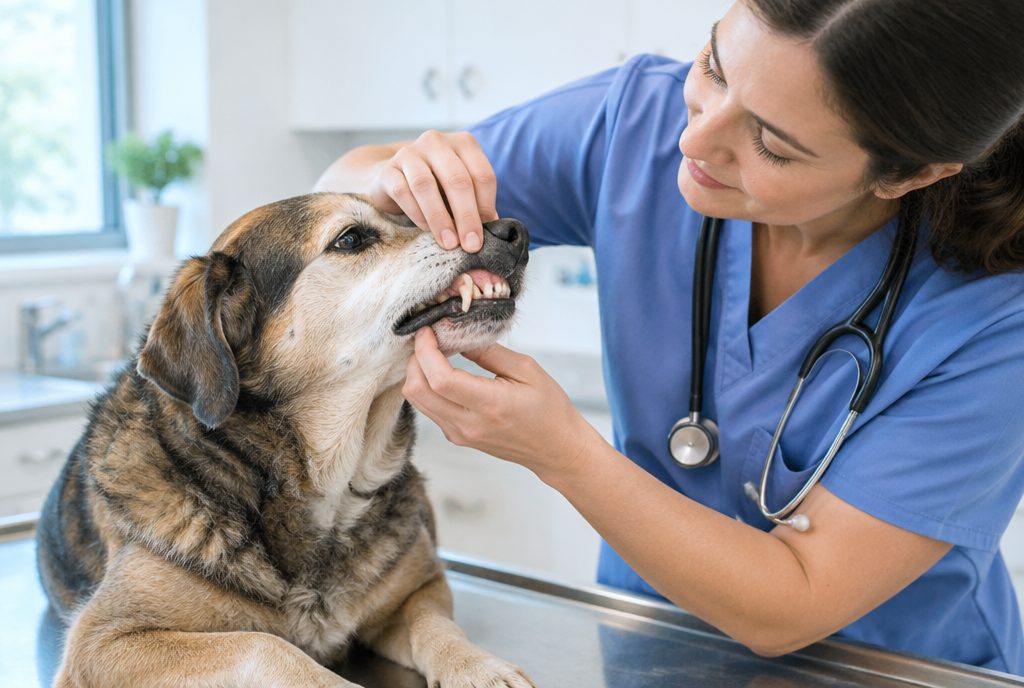
Your vet will look closely at the mass and feel the lymph nodes under the jaw and in the neck. Some dogs need light sedation so the whole mouth can be checked comfortably. A needle sample is sometimes tried first, but a tissue biopsy read by a pathologist is the most reliable way to confirm the tumor type.
Next comes staging, which shows how far the tumor reaches and whether it has spread. Depending on the tumor, this may include:
- Dental X-rays or a CT scan of the head to see how deep the tumor goes into the bone and to plan surgery
- Chest X-rays or a CT scan to look for spread to the lungs
- Needle samples of the lymph nodes under the jaw
- Bloodwork and a urine test to check general health before treatment
Merck notes that the lymph nodes near the jaw often become enlarged before the tumor itself is noticed. Once the biopsy results are back, your vet may refer you to a veterinary oncologist or surgeon to talk through the options.
What Treatment Options Are Available for Dog Cancer in Mouth?
Surgery to remove the whole tumor with a margin of healthy tissue is the main treatment for most oral tumors in dogs. Because many tumors grow into the jawbone, this often means removing part of the lower jaw (mandibulectomy) or upper jaw (maxillectomy). Merck explains that large parts of the jaw can often be removed without hurting a dog's quality of life.
Owners often worry most about how their dog will cope. The ACVS reports that most dogs eat within hours of jaw surgery and that most return to normal activities, including chewing toys and eating kibble. Soft food is usually given for about two weeks while the mouth heals, and some dogs wear a cone during that time. The face may look different afterward, and some dogs drool more or let the tongue hang out a little, depending on how much of the jaw was removed.
Other treatments may be added depending on the tumor type:
- Radiation therapy may be used before or after surgery, or when surgery is not possible.
- Chemotherapy is rarely used alone but may be combined with other treatments, especially when the cancer has spread.
- Immunotherapy, such as the canine melanoma vaccine, is sometimes offered for oral melanoma. Merck notes that studies on how much it helps have been mixed.
What Is the Outlook for a Dog With Mouth Cancer?
The outlook depends on the tumor type, its size, where it sits in the mouth, whether it has spread and whether it can be removed completely. For squamous cell carcinoma, Cornell notes that complete surgical removal can be curative, while cancer cells left behind are likely to cause regrowth.
Melanoma is harder. Merck reports median survival times for dogs with oral melanoma treated with surgery alone of about 511 days for stage I, 324 days for stage II and 336 days for stage III disease, with overall survival ranging from 1 to 36 months. Tumors at the front of the upper or lower jaw had the best survival times in one study. Your vet or oncologist is the best person to explain what these numbers mean for your own dog.
"Treatment is not only about adding time. It is about making sure the time your dog has is comfortable, with good days, good meals and the people they love."
Comfort Care and Managing Daily Challenges
Whether or not you choose surgery, comfort care matters every day. When surgery or radiation is not an option, Cornell notes that supportive care, including pain medication, nutrition support and antibiotics for infection, can keep a dog comfortable, though it does not slow the tumor.
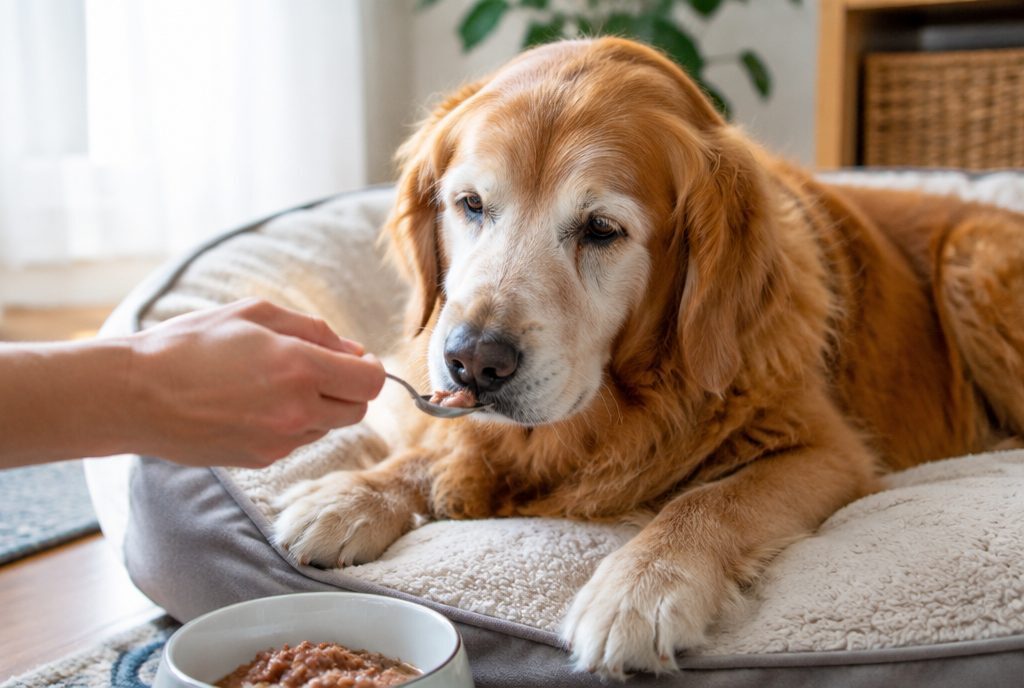
- Give pain medication exactly as prescribed. Mouth tumors are often painful, and many dogs hide it. Our guide on when pain looks like depression in senior pets explains the quieter signs.
- Switch to soft food. Canned food, softened kibble or food mashed with warm water is easier to eat. Small, frequent meals can help.
- Keep the mouth clean. Ask your vet before using any rinse or gel, and never put your fingers near a painful area.
- Watch for bleeding. Light spotting can happen, but heavy or repeated bleeding needs a vet's advice.
- Weigh your dog every week or two. Steady weight loss is an early sign that eating has become too hard.
Tip
Keep a small notebook or phone note by the food bowl. Write down how much your dog ate, any bleeding, and whether they seemed comfortable. Over a week or two, these notes make changes much easier to see and to share with your vet.
When Is It Time to Say Goodbye to a Dog With Mouth Cancer?
With mouth cancer, the hardest part is often eating. A dog who cannot eat without pain, who has repeated bleeding or whose tumor is causing swelling that makes breathing or swallowing hard is telling you that the disease has become too much. Deciding when to euthanize a dog with mouth cancer is about quality of life, not just the diagnosis.
Signs that it may be time to talk with your vet about saying goodbye include:
- Your dog refuses food, even soft food, or eats only with obvious pain
- Steady weight loss despite your best efforts
- Bleeding from the mouth that is frequent or hard to stop
- Pain that medication no longer controls
- A bad smell or infection that keeps coming back
- Swelling that affects the eyes, breathing or swallowing
- Hiding, restlessness or no longer enjoying the things and people they love
Older dogs often show other changes near the end of life too. Our guide to old dog behavior before death explains what to look for.
A Simple Quality-of-Life Check
It can help to ask yourself the same questions every day and jot down the answers. One hard day does not decide anything, but a pattern over a week usually becomes clear.

| Ask yourself | A worrying answer |
|---|---|
| Is my dog eating enough without struggle? | Skipping meals, dropping most food, losing weight |
| Is pain under control? | Pawing at the face, crying, flinching, not settling |
| Is bleeding or swelling getting worse? | More frequent bleeding, a swollen face or eye |
| Can my dog drink and swallow normally? | Gagging, choking or drooling large amounts |
| Does my dog still enjoy life? | No interest in family, walks, toys or favorite spots |
| Are there more good days than bad? | Bad days now outnumber good ones |
If you would like an unhurried conversation about your dog's comfort and what lies ahead, Honor Pet offers one-hour virtual quality of life consultations with a licensed veterinarian.
Saying Goodbye Peacefully and Planning Ahead
With cancer in a dog's mouth, waiting for a crisis can mean waiting for heavy bleeding or a day when your dog simply cannot eat. Many families find peace in choosing a calm day instead, while their dog can still enjoy a sunny spot, a gentle cuddle and the people they love.

Honor Pet's veterinarians provide in-home euthanasia throughout Los Angeles and surrounding areas, and gentle goodbyes in private, home-like rooms at our Comfort Center in downtown Los Angeles. Appointments are available 7 days a week, and same-day visits are often possible. In-home euthanasia is $550 and a Comfort Center appointment is $300.
During the appointment, your dog first receives a calming sedative so they can relax into a deep sleep. Only then is a second medication given, which lets the heart stop peacefully. You can stay close, talk to your dog and take as much time as you need.
Afterward, Honor Pet can care for your dog with water cremation, a gentle process that uses 90% less energy than fire cremation. Individual cremation, with ashes returned to you, is $349 for dogs under 20 lb, $399 for dogs 20 to 80 lb and $449 for dogs over 80 lb. Communal cremation is $180, $205 or $232 by the same weights. If you are caring for a dog with another type of cancer, our guides to lymphoma in dogs and mast cell tumors may also help.
Grief often starts long before the goodbye when a pet has cancer. Honor Pet's pet loss support is led by a licensed clinical social worker and includes free weekly virtual support groups. The Cornell Pet Loss Support Hotline is another caring place to talk.
Is mouth cancer changing your dog's life?
Our veterinarians can help you understand your dog's quality of life and plan a gentle goodbye when the time comes, at home or at our Comfort Center.
Talk to Honor Pet or call (323) 515-1234
Frequently Asked Questions
What is the life expectancy for dogs with mouth cancer?
It depends on the tumor type, size, location and whether it has spread. Squamous cell carcinoma and fibrosarcoma near the front of the mouth can sometimes be cured if they are removed completely. For oral melanoma treated with surgery alone, the Merck Veterinary Manual reports a median survival time of about 511 days (roughly 17 months) for stage I disease, with a wide overall range of 1 to 36 months.
How can mouth cancer affect my dog's eating and quality of life?
Mouth tumors can make chewing, drinking and swallowing painful. Dogs may drool, drop food, eat slowly, chew on one side or lose weight. Soft food, pain medication and close monitoring help many dogs stay comfortable, but when eating becomes a daily struggle, quality of life usually drops quickly.
What are the final stages of mouth cancer in dogs?
In the final stages, the tumor often grows larger and more painful. Dogs may stop eating, lose weight quickly, bleed from the mouth, develop a bad smell or infection, and have facial swelling. If the cancer has spread, they may also seem weak, tired or short of breath.
Is mouth cancer painful for dogs?
Yes, oral tumors are often painful, especially when they ulcerate or grow into the bone. Signs include pawing at the mouth, not wanting the head touched, chewing on one side and reluctance to eat. Pain medication from your vet can help. For fibrosarcoma, VCA notes that many tumors are painful and that surgery provides relief.
Can a dog eat and live well after part of the jaw is removed?
Usually, yes. The American College of Veterinary Surgeons reports that most dogs eat within hours of jaw surgery and return to normal activities, including chewing toys and eating kibble. Soft food is given for about two weeks while the mouth heals. The face may look different, and some dogs drool more afterward.
How much does pet euthanasia cost with Honor Pet?
Honor Pet's in-home euthanasia is $550, and a goodbye at our Comfort Center in downtown Los Angeles is $300. Individual water cremation is $349, $399 or $449 depending on your dog's weight, and communal cremation is $180, $205 or $232. Call (323) 515-1234 to talk with our team.
Remembering Your Dog
Many families want something to hold onto after the goodbye. The Honor Pet store offers keepsakes such as a clay paw print ($40), taken gently during aftercare, ink nose and paw prints ($55) and fur clippings ($7.50). A shadow box frame (from $65) can hold a paw print and a favorite photo together, so the memory of your dog stays close at home.