
Introduction
Arthritis in dogs is a long-term, painful joint disease, almost always osteoarthritis, in which the cartilage that cushions a joint slowly wears away. It causes stiffness, limping and trouble getting up, and it affects roughly 1 in 4 dogs. There is no cure, but most dogs can stay comfortable for years with a mix of weight control, gentle exercise, pain medication and changes at home. Keeping your dog lean is one of the most powerful things you can do, because every extra pound adds load and inflammation to sore joints.
Key Takeaways
- Arthritis in dogs is a chronic, progressive joint disease. It is common in older dogs but can start at any age, especially after hip or elbow dysplasia, a torn knee ligament or a fracture.
- Early dog arthritis symptoms are easy to miss: stiffness after rest, slower walks, hesitating at stairs or the car, and being grumpy when touched.
- Extra weight speeds arthritis up. In a lifelong study of Labrador Retrievers, dogs fed to stay lean developed hip arthritis later and needed treatment about three years later than their heavier littermates.
- Losing as little as about 6% of body weight improved lameness in obese dogs with arthritis in one clinical study.
- Treatment works best as a combination: weight loss, controlled exercise, rehabilitation, vet-prescribed pain relief and a safer home. Never give your dog human pain relievers.
- When pain can no longer be controlled and good days become rare, a peaceful goodbye can be the kindest choice.
If your dog has started to slow down on walks, groans when lying down or looks at the stairs before climbing them, it is natural to wonder whether this is just age. Often it is arthritis, and the good news is that there is a lot you can do. This guide explains what arthritis is, the early and late signs, what raises your dog's risk, why weight matters so much, how vets diagnose and treat it, how to help a dog with arthritis at home, and how to think about quality of life in the later stages.
What Is Arthritis in Dogs?
When vets talk about arthritis in dogs, they almost always mean osteoarthritis, also called degenerative joint disease. Cornell University's Riney Canine Health Center describes it as a chronic and progressive joint disease in which dogs lose joint cartilage, which then leads to changes in the bone, pain, inflammation and difficulty using the leg.
A healthy joint has smooth cartilage on the ends of the bones and a thick fluid that lets them glide past each other. In an arthritic joint, the fluid thins, the cartilage wears down and the bone underneath reacts by forming small bony spurs. The American College of Veterinary Surgeons explains that the pain of osteoarthritis in dogs comes from cartilage damage, exposed bone, friction, bony change and inflammation inside the joint.
Arthritis is very common. Canadian veterinary consensus guidelines note that most research puts it at about 1 in 4 dogs, and the authors suspect that is an underestimate, because the disease is often not noticed until its later stages. Hips, knees, elbows, shoulders and the spine are the joints most often affected.
Dog Arthritis Symptoms: Early and Late Signs
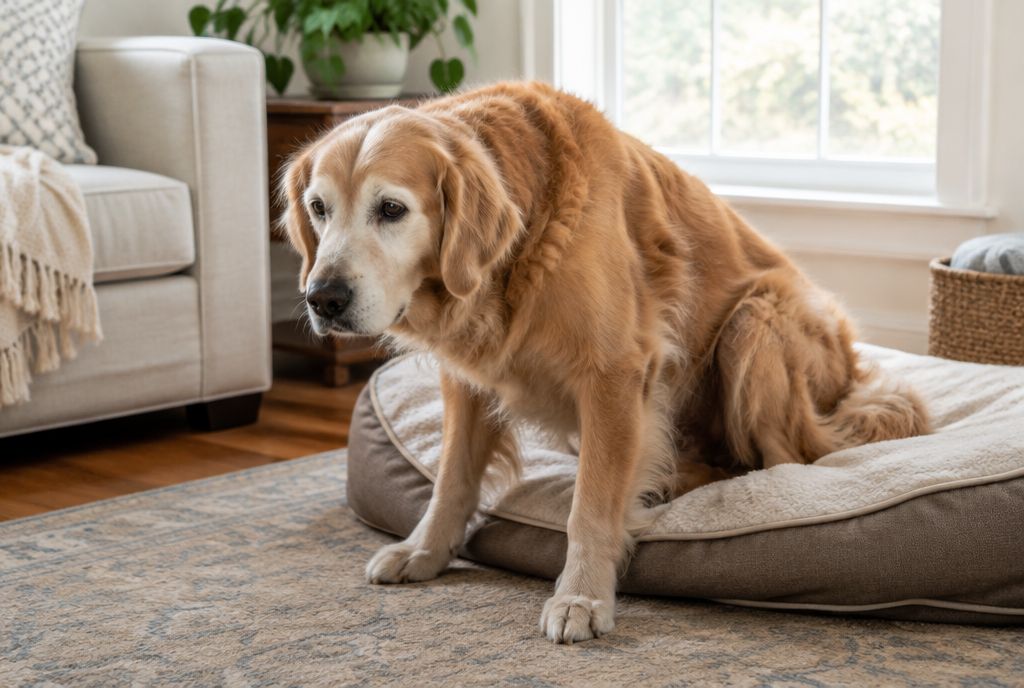
Dogs rarely cry out from joint pain. Instead, they quietly change how they move and what they choose to do. Many owners put these changes down to "getting old" until the pain is well established. Watching for the early signs gives your dog the best chance of staying comfortable for longer.
| Early signs | Later signs |
|---|---|
| Stiffness after sleep or a long rest that eases once moving | Stiffness that lasts all day, or limping on one or more legs |
| Slower walks, lagging behind or turning for home early | Short walks only, or not wanting to walk at all |
| Hesitating before stairs, the couch or the car | Unable to manage stairs or jump without help |
| Taking longer to lie down or get up, sometimes with a groan | Struggling to stand, slipping on floors, falling |
| Licking a joint, or flinching when touched in one spot | Thinner muscles on the back legs, thickened or swollen joints |
| Seeming grumpy, sleeping more, less interest in play | Snapping when handled, restlessness at night, withdrawal |
The American College of Veterinary Surgeons also lists a waddling walk or swaying of the body and "bunny hopping" with both back legs together. Cornell adds that sudden behavior changes, such as irritability or aggression, can be a sign of joint pain. Pain can even look like low mood or confusion, as we explain in when pain masquerades as depression in senior pets.
Tip
Take a short phone video of your dog getting up, walking and climbing a step at home. Dogs often hide stiffness in the excitement of a vet visit, so a video shows your veterinarian what your dog's joints are really like on an ordinary day.
Not every wobble is arthritis. Weakness in the back legs can also come from spinal problems such as IVDD or degenerative myelopathy, which need different care. That is one reason a vet exam matters.
Causes, Breeds and Risk Factors
Arthritis usually has more than one cause, and sometimes no single cause is found. Cornell explains that conditions which repeatedly damage joint cartilage can lead to arthritis, including:
- Hip dysplasia and elbow dysplasia, where the joint does not form properly as the puppy grows
- Cranial cruciate ligament damage, the dog version of a torn knee ligament
- Kneecaps that slip out of place (patellar luxation)
- Old fractures or other injuries to a joint
- Repeated high-impact activity over many years
- Obesity, which adds force to the joints and feeds inflammation
Age plays a part too. The American College of Veterinary Surgeons notes that as dogs age, their cartilage changes and is less able to repair damage. It also points out that young large-breed dogs with developmental bone disease and older, overweight large-breed dogs are the groups most commonly affected. Large and giant breeds, and breeds known for hip or elbow dysplasia, carry a higher risk, but arthritis is not only a big-dog or old-dog problem. Cornell stresses that it can develop at any age, especially in dogs with obesity or another orthopedic condition.
How Excess Weight Affects Arthritis in Dogs
Of all the risk factors for arthritis, weight is the one you can most easily change, and it may be the most important. Excess weight does not just make movement harder. It changes what happens inside the joint.
Picture carrying two 5-pound bags of sugar around all day. For a medium-sized dog, 10 extra pounds is a lot, and it is not unusual to see a senior dog carrying that much. Every step, every stand-up and every turn on a slippery floor puts that extra load through hips, knees and elbows that may already be sore.
Why Extra Pounds Hurt Arthritic Joints
Extra weight harms joints in two ways at once:
- More force on every joint. Cornell notes that obesity adds force to the joints. Cartilage under constant extra pressure wears down faster than it can repair, like the shocks on a car that is always overloaded.
- More inflammation. Fat is not just stored energy. Fat cells release inflammatory substances that, according to Cornell, make osteoarthritis worse. That means an overweight dog's joints are dealing with low-grade inflammation all the time, on top of the wear and tear.
The result is a painful cycle. Sore joints make a dog move less. Moving less leads to weight gain and lost muscle. Less muscle means less support around the joint, which brings more pain and even less movement. Breaking that cycle is one of the main goals of arthritis care.
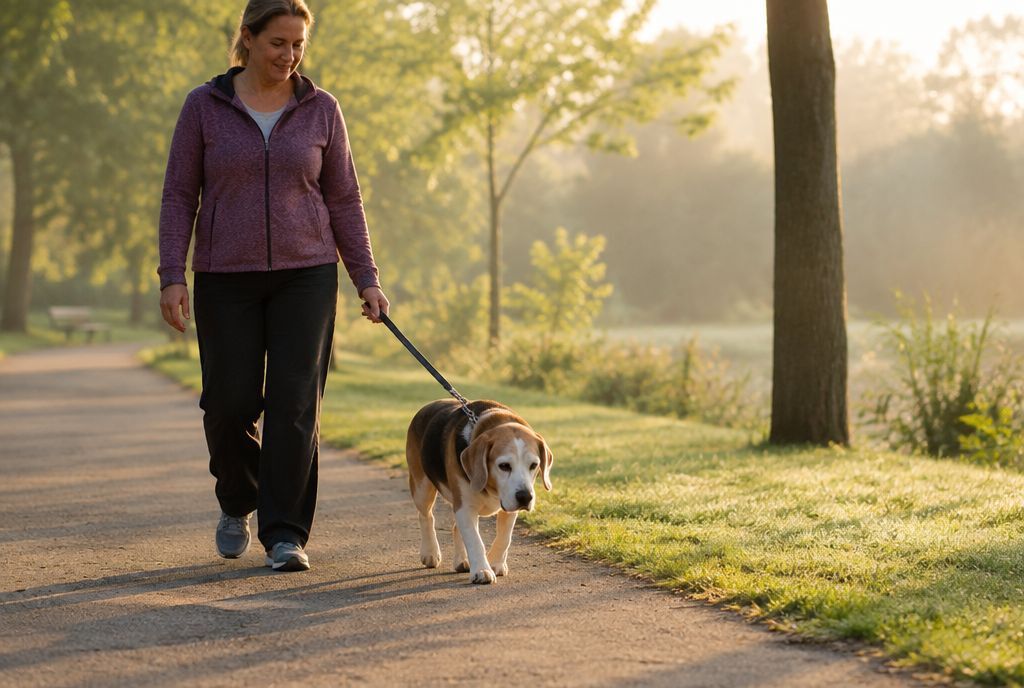
The strongest evidence comes from the Purina Life Span Study, which followed 48 Labrador Retrievers from puppyhood for their whole lives. Half were fed 25% less food than their paired littermates, so they stayed lean. According to the Purina Institute, by the end of the study 83% of the dogs on the regular feeding plan had X-ray signs of hip arthritis, compared with 50% of the lean dogs. The lean dogs also lived a median of 1.8 years longer. University of Pennsylvania researchers involved in the study reported that the lean dogs did not need arthritis treatment until an average age of 13.3 years, about three years later than the heavier dogs.
"You are in charge of what goes in your dog's bowl. That makes weight the one arthritis risk you can change starting today."
How Much Weight Loss Makes a Difference
You do not need to transform your dog to see a change. In a University of Glasgow study of obese dogs with arthritis in the hips or elbows, lameness improved noticeably once dogs lost about 6% of their body weight, and gait measurements confirmed the improvement from around 9%. For a 70-pound dog, 6% is just over 4 pounds.
A healthy weight for most dogs means you can easily feel the ribs under a thin layer of fat, and you can see a clear waist when you look down from above. Vets score this on a body condition scale, and they can tell you your dog's ideal weight and how fast to aim for it. A few ground rules help:
- Weigh, do not guess. Use a measuring cup or kitchen scale for every meal.
- Count the treats. Treats and table scraps add up quickly. Swap some for small pieces of a lower-calorie option your vet approves, or use part of the daily kibble as treats.
- Go slow and steady. Crash diets cost muscle, and muscle is exactly what arthritic joints need. Ask your vet for a target rate of loss and a diet that keeps protein up.
- Weigh your dog every couple of weeks and adjust with your vet if the scale stops moving.
For a full plan, see our step-by-step guide to creating a weight loss plan for your senior pet and our article on weight management in senior pet care. Keeping puppies and young adults lean matters too. The American College of Veterinary Surgeons notes that diet restriction in dogs has been shown to reduce arthritis in the hips, elbows and shoulders.
How to Help a Dog With Arthritis
There is no single fix for arthritis. Cornell describes the best approach as multimodal: several treatments used together, with three goals in mind. Those goals are to keep pain under control, slow the disease down, and keep or build the muscle that supports the joints. Your vet will tailor the plan to your dog, and it usually changes over time as the disease progresses.
Diagnosis and Treatment Options
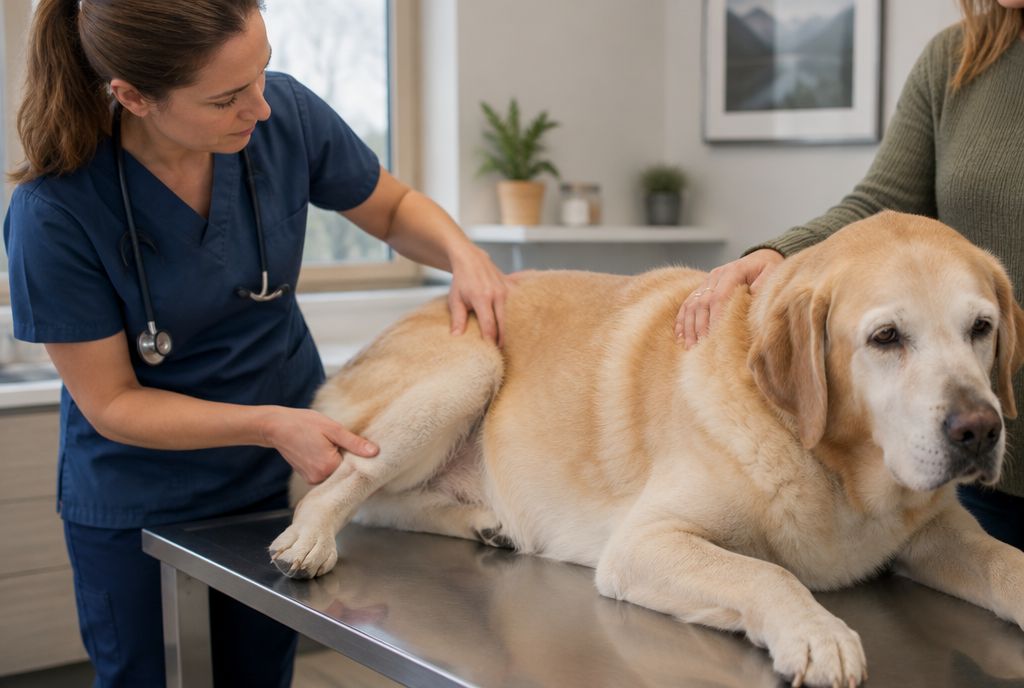
Diagnosis starts with a physical exam. Your vet will watch your dog walk and stand, then gently feel and move each joint to look for pain, swelling, grinding or a reduced range of motion. X-rays show changes in the joints and bones and can reveal an underlying cause such as hip dysplasia. In some cases, a CT scan, MRI or arthroscopy is used to look at cartilage and soft tissue that X-rays cannot show.
Once arthritis is confirmed, treatment usually draws on several of these options:
| Treatment | What it does | Good to know |
|---|---|---|
| Weight loss | Reduces force and inflammation in the joints | The foundation of every plan for an overweight dog |
| Controlled, low-impact exercise | Keeps muscles strong and joints moving | Leash walks and swimming are better than ball chasing |
| Physical rehabilitation | Builds strength and range of motion | May include an underwater treadmill, exercises, laser therapy or acupuncture |
| NSAIDs (anti-inflammatory pain relievers) | Ease pain and inflammation | Dog-specific only; long-term use needs regular blood tests |
| Other pain medicines | Add pain control when NSAIDs alone are not enough | Gabapentin and amantadine are often combined with NSAIDs |
| Monthly anti-NGF injection | Blocks a protein involved in arthritis pain signals | Given by your vet once a month; ask about possible side effects |
| Joint supplements | Support joint health alongside other treatment | Glucosamine, chondroitin and omega-3 fatty acids; not a replacement for pain relief |
| Joint injections | Treat inflammation inside a specific joint | Options include platelet-rich plasma, stem cells and radiosynoviorthesis |
| Surgery | Fixes an underlying cause | Considered for hip dysplasia, a torn cruciate ligament or elbow dysplasia |
The monthly anti-NGF injection is the newest option. The U.S. Food and Drug Administration approved it in May 2023 as the first monoclonal antibody for dogs with osteoarthritis pain. It works by binding nerve growth factor, a protein that is raised in dogs with arthritis and helps send pain signals. In December 2024 the FDA wrote to veterinarians about reports of side effects in some treated dogs, including loss of coordination, seizures and weakness, so talk through the benefits and risks with your vet and report any changes you notice.
Never give your dog human pain relievers
The FDA warns that aspirin, ibuprofen and naproxen may not be safe for dogs, and that acetaminophen can damage a dog's liver and red blood cells. Before giving any pain reliever, call your vet. If your dog is on a prescribed NSAID and you notice vomiting, diarrhea, loss of appetite, black or bloody stool, or yellow eyes or gums, stop the medicine and call your veterinarian.
Home Care, Exercise and Comfort
What you do at home every day matters as much as anything your vet prescribes. Small changes can make a big difference to an arthritic dog.
Keep exercise little and often. Several short, gentle walks on flat or soft ground are better than one long outing or a weekend burst of activity. Cornell recommends low-impact activity such as leash walks and swimming. Avoid ball chasing, sudden stops and jumping. If your dog is stiffer or limping the next day, that walk was too much, so make the next one shorter.
Make the home safer. Slippery floors are hard on sore joints and can lead to falls. Cornell suggests non-slip rugs and ramps for beds, couches and cars. You can also:
- Lay rugs or yoga mats along the routes your dog uses most, especially near food bowls and doors
- Use a ramp or pet steps for the car and the couch, and baby gates to block stairs when you are not there
- Raise food and water bowls slightly if bending down seems uncomfortable
- Keep nails trimmed and the fur between paw pads short for better grip
- Use a support harness or sling to help your dog up steps or into the car
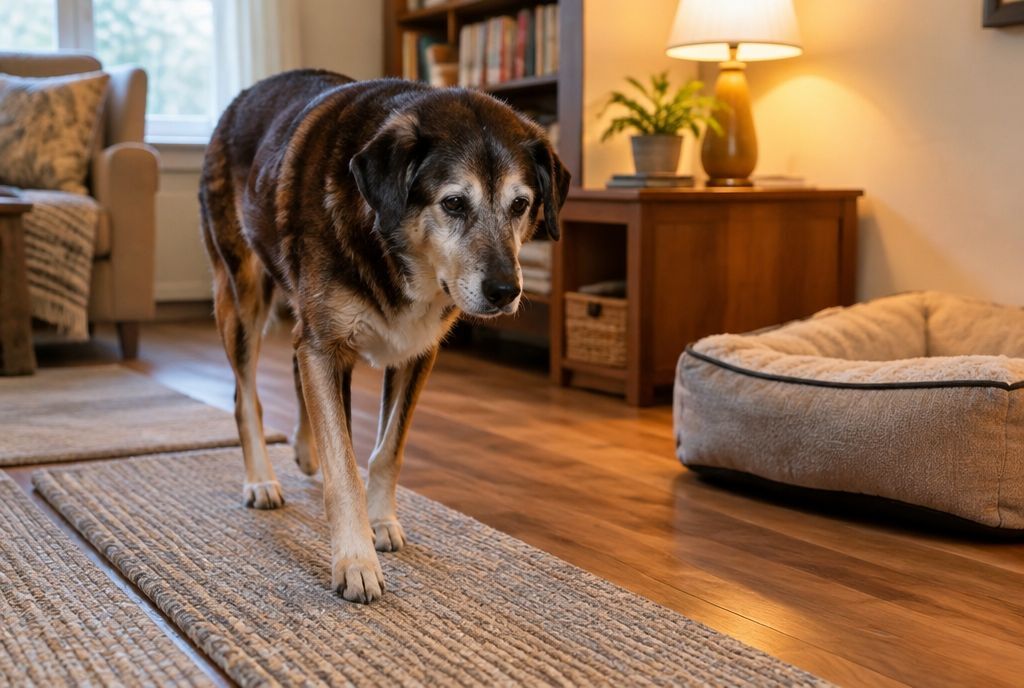
Give them a good bed. A thick, supportive orthopedic or memory foam bed with a low edge is easy to step into and cushions sore hips and elbows. Place it somewhere warm and away from drafts, since some arthritic dogs seem stiffer in the cold.
Try gentle hands-on care. Light massage and slow, gentle stretching can help some dogs feel looser, as long as they enjoy it. Our beginner's guide to pet massage shows you how. Ask your vet or a rehabilitation vet before starting stretches on a painful joint.
Keep their mind busy. A dog who cannot run as far still needs to sniff, think and play. Slow sniff walks, food puzzles and short training games keep life interesting without stressing the joints.
For more ideas on setting up your home, read how to make your home senior pet friendly. If your dog is already losing a lot of mobility, our guide to supporting senior dogs with mobility loss covers harnesses, slings and other aids in detail.
Living Well With Arthritis and Knowing When It Is Time
Many dogs live for years with arthritis, and with good care those years can be happy ones. Cornell notes that earlier diagnosis and treatment lead to better long-term results. Because arthritis is progressive, though, many families eventually reach a point where pain is hard to control, even with the best plan.
Signs that arthritis may be taking away more than it leaves include:
- Pain that medication no longer controls, or side effects that make the medicine hard to use
- Your dog cannot stand up, walk outside to toilet or reach food and water without help
- Repeated falls, or lying in one spot for most of the day
- Panting, pacing or restlessness at night that suggests pain
- Accidents in the house because getting up is too hard
- No longer enjoying walks, family time or the things they used to love
- Bad days now outnumbering good ones
Keeping a simple daily record helps you see the pattern clearly, rather than judging on one hard day. Our quality of life checklist walks you through the questions to ask. If you would like an unhurried conversation about your dog's comfort and what lies ahead, Honor Pet offers one-hour virtual quality of life consultations with a licensed veterinarian.
When the time comes, Honor Pet's veterinarians provide in-home euthanasia throughout Los Angeles and surrounding areas, so a dog who struggles to get in the car can stay in their own bed. We also offer gentle goodbyes in private, home-like rooms at our Comfort Center in downtown Los Angeles. In-home euthanasia is $550 and a Comfort Center appointment is $300. Your dog first receives a calming sedative so they can relax into a deep sleep, and only then is a second medication given that lets the heart stop peacefully.
Afterward, we can care for your dog with water cremation, a gentle process that uses 90% less energy than fire cremation. Individual cremation, with ashes returned to you, is $349 for dogs under 20 lb, $399 for dogs 20 to 80 lb and $449 for dogs over 80 lb. Communal cremation is $180, $205 or $232 by the same weights. Our pet loss support team, led by a licensed clinical social worker, runs free weekly virtual support groups for anyone who needs to talk.
Is arthritis changing your dog's life?
Our veterinarians can help you understand your dog's quality of life and plan a gentle goodbye when the time comes, at home or at our Comfort Center.
Talk to Honor Pet or call (323) 515-1234
Conclusion
Arthritis in dogs is common, painful and progressive, but it does not have to take away your dog's good years. Learn the early signs, get a vet diagnosis, and build a plan that combines pain relief, gentle exercise and a safer home. Above all, keep your dog lean. Losing even a few pounds can ease lameness, and lifelong weight control can delay arthritis by years. With steady care, most dogs with arthritis keep enjoying their walks, their meals and their people for a long time.
Frequently Asked Questions
What are safe home remedies and gentle pain relief for dogs with arthritis?
Safe home support includes keeping your dog lean, short and frequent low-impact walks, a thick supportive bed in a warm spot, non-slip rugs over slick floors, ramps instead of jumping, and gentle massage if your dog enjoys it. These help a lot but do not replace pain relief. Never give human pain medicines such as ibuprofen, naproxen, aspirin or acetaminophen. Ask your vet for a dog-specific option.
Can supplements and diet changes help manage dog arthritis?
Diet changes help the most when they bring an overweight dog down to a healthy weight, since that reduces both force and inflammation in the joints. Cornell lists glucosamine, chondroitin and omega-3 fatty acids as joint supplements that can be part of a plan. They work best alongside weight control, exercise and pain relief, not instead of them. Check doses with your vet.
When should I seek veterinary help for my dog's arthritis symptoms?
See your vet as soon as you notice stiffness that keeps coming back, limping, trouble getting up, hesitation at stairs or the car, or a change in mood when touched. Early treatment leads to better long-term results. See a vet urgently if your dog suddenly cannot use a leg, cannot stand, or cries out in pain, since that may be an injury or spinal problem rather than arthritis.
Can arthritis in dogs be cured?
No. Arthritis is a chronic, progressive disease and the cartilage damage cannot be reversed. However, pain can be managed and the disease slowed. Cornell notes that many dogs live comfortably with a combination of treatments. Surgery can sometimes fix an underlying cause, such as a torn cruciate ligament, which may slow further damage.
How long can a dog live with arthritis?
Many dogs live for years after an arthritis diagnosis. How long and how well depends on how severe it is, how many joints are affected, how well pain responds to treatment and your dog's other health conditions. Staying lean helps: in the Purina Life Span Study, lean-fed Labradors lived a median of 1.8 years longer.
When is it time to say goodbye to a dog with arthritis?
It may be time to talk with your vet about euthanasia when pain can no longer be controlled, your dog cannot get up, toilet or reach food and water without help, falls are frequent, and bad days outnumber good ones. A daily quality of life record makes the pattern easier to see. Honor Pet offers virtual quality of life consultations and gentle in-home goodbyes in Los Angeles.
Remembering Your Dog
When the time does come, the Honor Pet store offers keepsakes such as a clay paw print ($40), taken gently during aftercare, ink nose and paw prints ($55) and a fur clipping ($7.50). A shadow box frame (from $65) can hold a paw print and a favorite photo together, so the memory of your faithful walking companion stays close at home.